This post contains affiliate links. As an Amazon associate, I earn from qualifying purchases.
Greetings, Internet Stranger! I’m Stella Jane, and welcome to 24 hours in San Antonio—a city so big, bold, and historically unhinged that one single day barely scratches the surface. But fear not. We’re brave. We’re efficient. We’re wearing comfortable shoes.
San Antonio is the seventh-largest city in the United States and the second-largest city in Texas, which means it is, by definition, enormous. As I always say: if it’s big enough for Texas, it’s big enough for you. (This logic has never failed me.)
This city is famous for a lot of very important reasons. It was one of the largest settlements in the Spanish colonies. Later, it became the site of a pivotal battle between Texas and Mexico—an event that looms large in American history textbooks and even larger in Texas gift shops.
But in my household, San Antonio is most famous for something else entirely: being the destination of Pee-wee Herman’s epic quest after a dastardly thief stole his bicycle and a deeply unreliable psychic told him it was hidden in the basement of the Alamo.
(Important note: the Alamo does not have a basement. Pee-wee was lied to. We were all lied to.)
Whether you’re a proud Texan, a Spanish-colonial-history nerd, a Mexico-history nerd, a movie nerd, or just someone who likes good food and cities with personality, San Antonio has something waiting to surprise and delight you.
So join me for a jam-packed 24 hours in San Antonio—actually, three different flavors of it, depending on your vibe—and together we’ll eat well, learn things, and absolutely mess with Texas (respectfully).
⭐ Top 3 San Antonio Tours (Because You Only Have 24 Hours, Internet Stranger)
🏛️ Small-Group World Heritage San Antonio Missions Guided Tour
If you’re even remotely interested in history (or UNESCO bragging rights), this tour is a slam dunk. You’ll visit all four San Antonio Missions—yes, all of them—without having to figure out transportation, timelines, or what order makes sense. A knowledgeable guide does the explaining while you nod wisely and think, Wow, I’m so cultured now.
Why I love it: small group, zero stress, and big “I actually learned something on vacation” energy.
👉: Book this tour if you want deep history without deep homework.
🚍 San Antonio Premium City Tour with Alamo & San Antonio River Walk Cruise
This is the “show me everything” tour. You get a guided city overview, time at the Alamo (still no basement, sorry), and a relaxing River Walk cruise where you can sit back and let San Antonio show off a little. It’s efficient, scenic, and ideal if this is your first visit and you want the greatest hits album.
Why I love it: maximum coverage, minimum effort—iconic sights with air conditioning.
👉: Book this tour if you want to see it all and still have energy for dinner.
🌮 San Antonio Centre Food Tour: 6 Tastings with Tacos & Ice Cream
Listen. You cannot understand San Antonio without eating your way through it. This small-group food tour takes you through the historic center with six tastings—think tacos, sweets, and the kind of bites that make you stop mid-chew and whisper, oh wow. You’ll get food, stories, and walking directions all wrapped into one delicious package.
Why I love it: it’s basically dinner, dessert, and cultural education pretending to be a tour.
👉: Book this tour if your travel philosophy is “history, but make it edible.”

🏨 Where to Stay in San Antonio?
As previously established, San Antonio is huge. Like, “you could stay in the wrong neighborhood and accidentally add an hour of driving” huge. So location matters, Internet Stranger.
For my 24 hours in San Antonio, I stayed at the Drury Inn & Suites San Antonio Near the Alamo, and I would absolutely do it again without hesitation or hotel-shopping-induced stress.
First of all, the location is chef’s kiss—conveniently close to the Alamo, which means you can roll out of bed and be at one of the most famous landmarks in American history before your coffee even kicks in. (A bold move, but a rewarding one.)
Second, breakfast is included every morning, which I firmly believe should be a constitutional right. And then—then—there’s the Drury happy hour situation, where you get free drinks and snacks in the evening. After a long day of sightseeing, this felt less like a perk and more like a personal hug from the hotel industry.
Comfortable rooms, a prime location, free food, and bonus beverages? What more could a weary Internet Stranger want.
👉: If you’re planning your own 24 hours in San Antonio, do yourself a favor and book the Drury Inn & Suites early—central, cozy, and delightfully snack-forward.
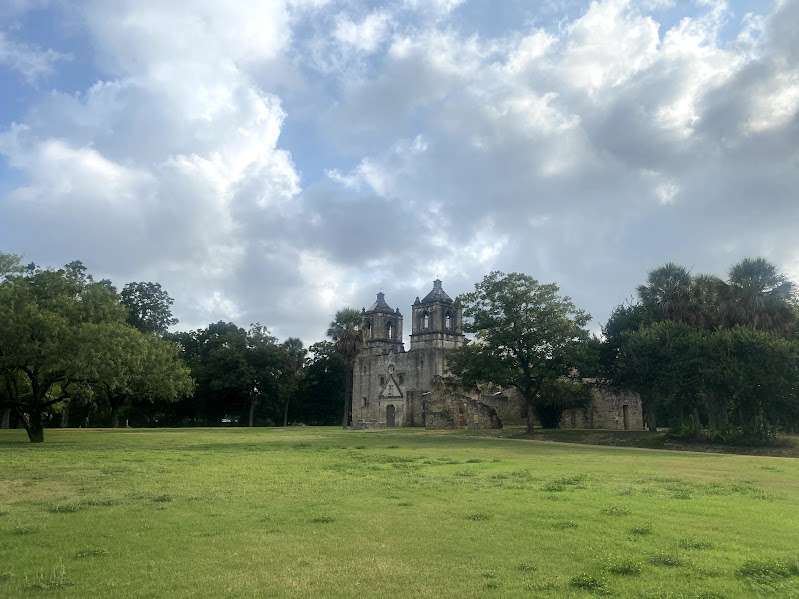
📍 Day One: Missions, Icons & a Very Serious Dinner
We’re starting strong, Internet Stranger. Day One in San Antonio is all about getting your historical bearings in the morning, hitting the city’s most famous sights in the afternoon, and then rewarding yourself with a dinner so thoughtful and precise it feels like edible art.
We’ll kick things off with a guided tour of the San Antonio Missions, because nothing sets the tone for a city like understanding how it came to be. These beautifully preserved sites tell the story of Spanish colonial history, Indigenous communities, and the complicated, fascinating roots of San Antonio—without you having to read seventeen plaques in the Texas heat.
In the afternoon, it’s time for the heavy hitters: the Alamo (still no basement, I checked again) and a leisurely stroll along the San Antonio River Walk, where shaded paths, water views, and people-watching opportunities abound. This is peak “I’m on vacation and thriving” energy.
And then—because balance is important—we cap the day with dinner at Mixtli, one of the most celebrated restaurants in San Antonio. This is not a casual taco situation. This is a curated, multi-course experience inspired by Mexican history and regional storytelling. You will eat. You will learn. You may text someone afterward and say, “This meal changed me.”
History in the morning, icons in the afternoon, and a destination-worthy dinner at night—Day One understood the assignment.
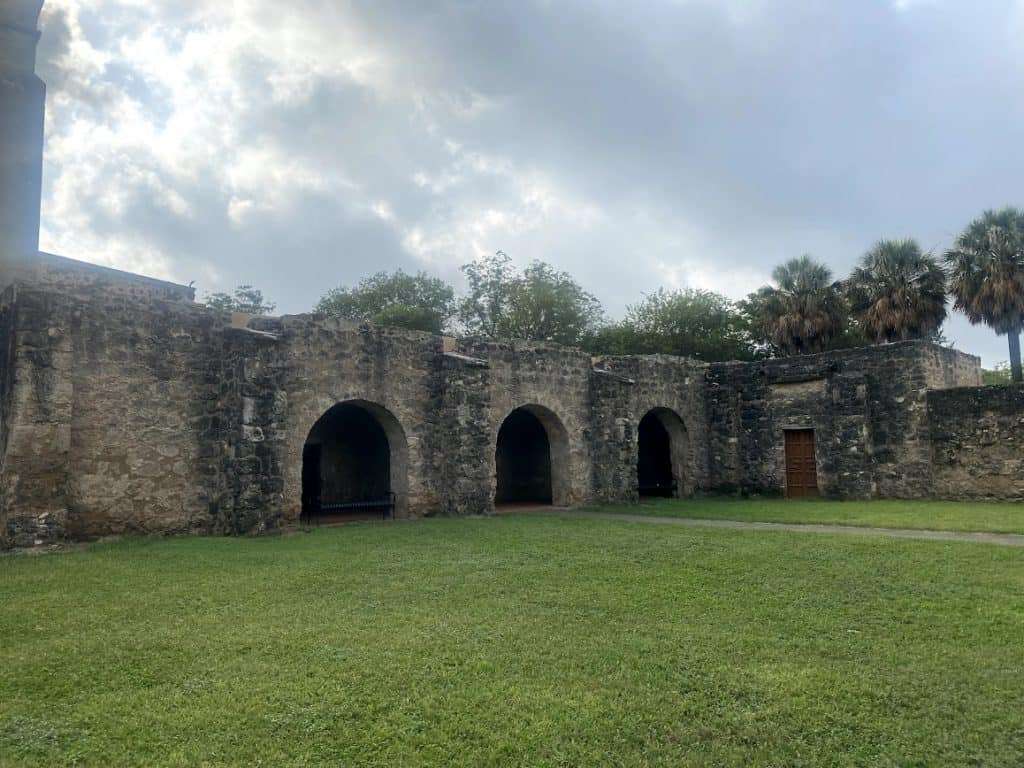
🌅 Morning: Tour the Missions
San Antonio’s missions are one of the things that make this city truly special—and not just “Texas special,” but globally important special. These Spanish colonial sites tell the story of San Antonio’s earliest days, blending Indigenous history, colonial ambition, architecture, and religion in a way you really can’t get anywhere else in the United States.
That said, here’s the annoying part: the missions are not easy to reach via public transportation. And while you could rent a car, drive around an unfamiliar city, figure out parking, and quietly mutter to yourself on vacation… why would you?
This is why I booked a small-group guided tour of the San Antonio Missions, and I cannot recommend this approach highly enough. Our guide explained why these buildings matter, how they earned their UNESCO World Heritage status (a genuinely rare honor), and how each mission fits into the larger story of the city—without it ever feeling like a lecture.
The group was small—just me and a handful of other solo ladies—so we had plenty of time for questions, wandering, and soaking it all in. Bonus: it was way cheaper than renting a car, and I got to relax and feel smugly efficient before lunchtime.
👉 : Book the missions tour in advance—it’s the easiest, smartest way to see one of San Antonio’s most important sights without the stress of driving.
Then get ready for…
Approximately Top 5: San Antonio Missions
(History nerds, this one’s for you.)
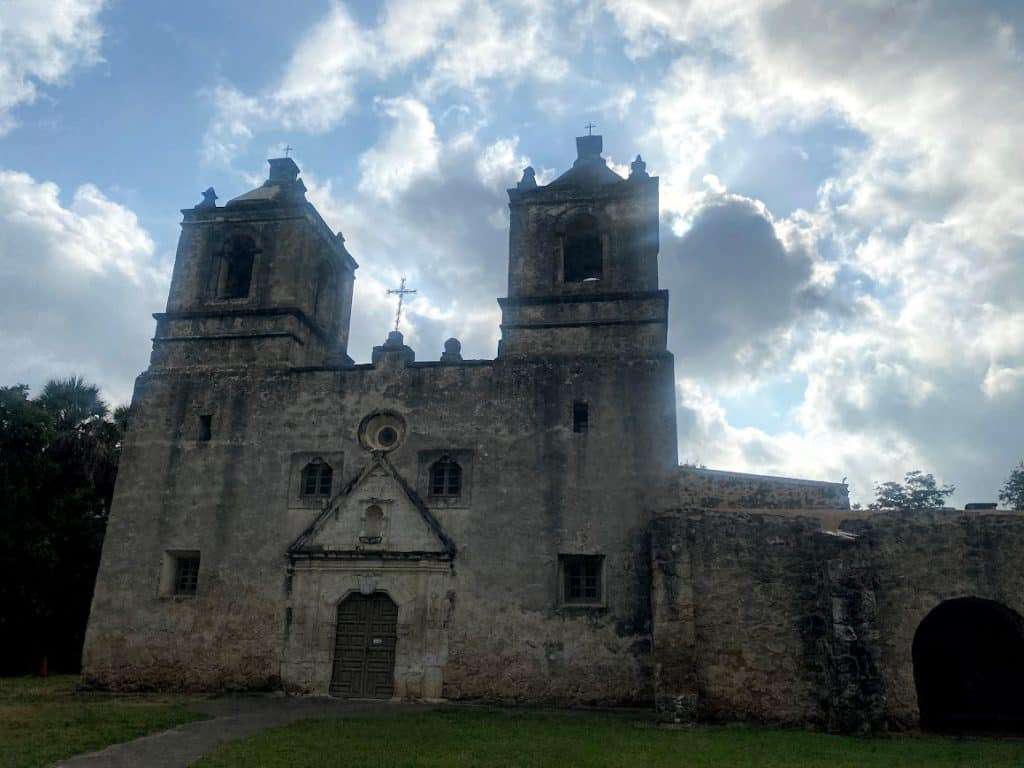
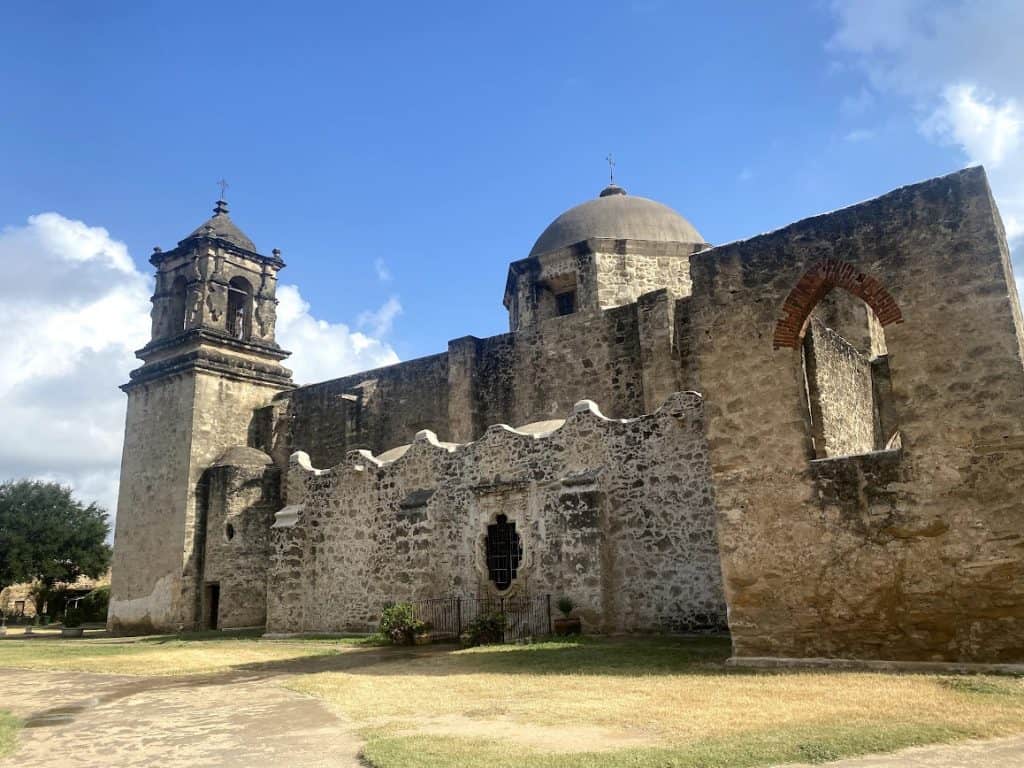
1) Mission Concepción
What a lovely place to begin our mission tour. Mission Concepción is probably the prettiest mission in San Antonio, and starting here feels like easing gently into history instead of being shoved into it face-first.
Our guide—whom I shall call Framber—explained something fascinating: you can often tell how well the priests who ran a mission got along with the local American Indians just by looking at the building itself. The Spanish priests depended on local communities to quarry stone and construct the missions. If relations were tense, construction stalled. If relations were cooperative, the architecture flourished.
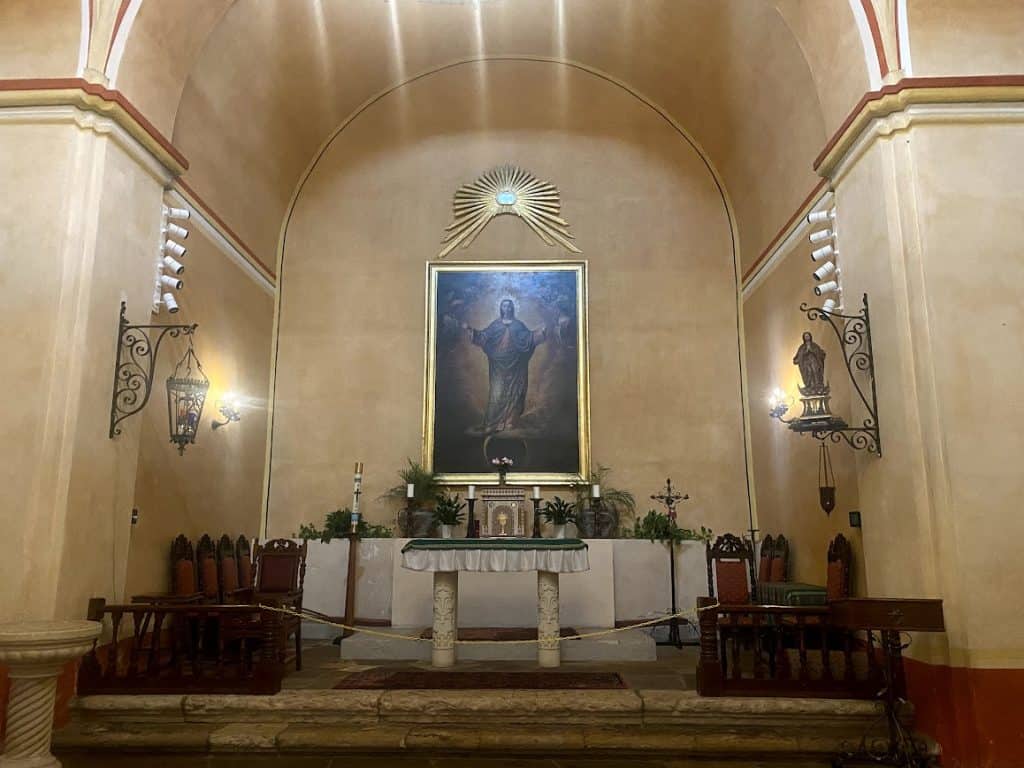
And flourish it did. The stonework at Mission Concepción is impressively advanced, which suggests that the priests here had a relatively functional relationship with the locals. You also get to go inside the chapel, which makes the whole experience feel more intimate and less like you’re just admiring history from behind a velvet rope.
Framber also dropped some context that made this site hit harder: the Spanish government wanted priests to refuse food or aid to local American Indians unless they agreed to convert to Christianity. The priests at Mission Concepción refused to follow that directive—apparently because they remembered that Jesus had some very strong opinions about feeding the poor.
2) Mission San José
Mission San José is also quite beautiful, but the vibe here is noticeably different. Framber pointed out that you can tell the priests at this mission didn’t get along with the local communities nearly as well—because there’s a large defensive wall surrounding the entire complex. That wall wasn’t decorative. If relations with nearby groups had been friendly, there would’ve been no need for it.
Architecture doesn’t lie, Internet Stranger.
The most striking feature of Mission San José is its famous rose window, an intricate stone carving that feels almost impossibly delicate for something made of rock. According to Framber (who clearly enjoys a good tragic backstory), the young artisan who created the window had a fiancée who died before they could be married. Shortly afterward, the artisan himself died—of what was described as a broken heart.
Is it devastating? Yes.
Is it also extremely on-brand for history to give us a masterpiece wrapped in sadness? Also yes.
At least he left behind this stunning window, so centuries later we’re still standing here, staring up at it, and remembering his story. Which feels like the closest thing history offers to a happy ending.
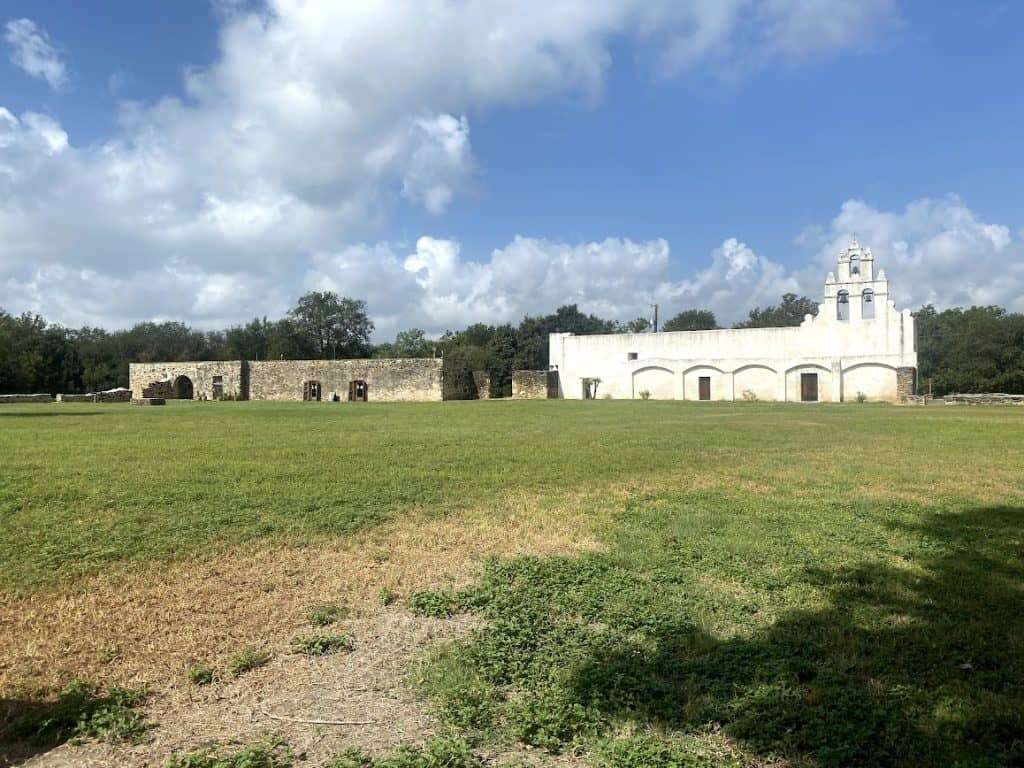
3) Mission San Juan Capistrano
At the first two missions, we stayed pretty close to Framber, listening intently and soaking up context like responsible adults on a guided tour. But at Mission San Juan, we were given time to wander—and this mission rewards quiet exploration.
One of the most interesting and moving areas here is the burial ground, where both Spanish priests and Indigenous people were laid to rest. During an archaeological examination of the site, the graves were carefully relocated. Afterward, the remains were reinterred in a joint ceremony conducted by the Catholic Church and local Indigenous religious leaders—a rare and genuinely respectful moment of shared remembrance.
It’s a small detail, but it adds emotional weight to the site. Mission San Juan feels less like a monument frozen in time and more like a place where history is still being thoughtfully tended.
And that’s not just a metaphor. Mission San Juan is still an active church, so as you wander the grounds you may see a priest or two going about their day. It’s a gentle reminder that this isn’t just a historical site—it’s a living one.
4) Mission Espada
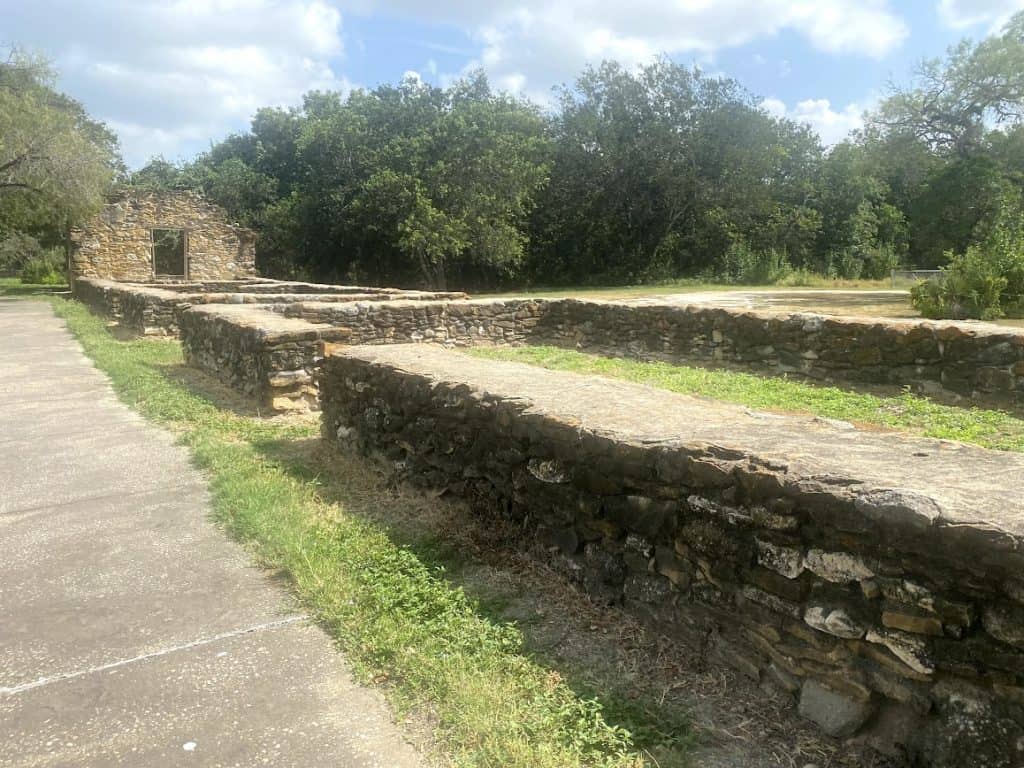
Our final stop was Mission Espada, also known as Mission San Francisco, and it comes with a major historical flex: it was the first mission established in Texas. No pressure or anything.
The Franciscan priests came here with the goal of converting the local Indigenous population, but their efforts weren’t especially successful. One major reason? The mission was periodically attacked by the Apache and the Comanche, which made long-term stability… challenging.
Because of these attacks, Spanish officers were sometimes stationed at Mission Espada for protection. Framber described this as “not too many” soldiers, which immediately made me curious. What, exactly, does “not too many” mean in a colonial context? Two? Five? One guy with a mustache and a bad attitude?
I’m guessing that from the perspective of the local communities, even one Spanish officer probably felt like too many.
Mission Espada feels less polished than some of the earlier stops, but that roughness tells its own story—one of conflict, resistance, and the limits of colonial control. It’s a fitting final m
5) Espada Aqueduct
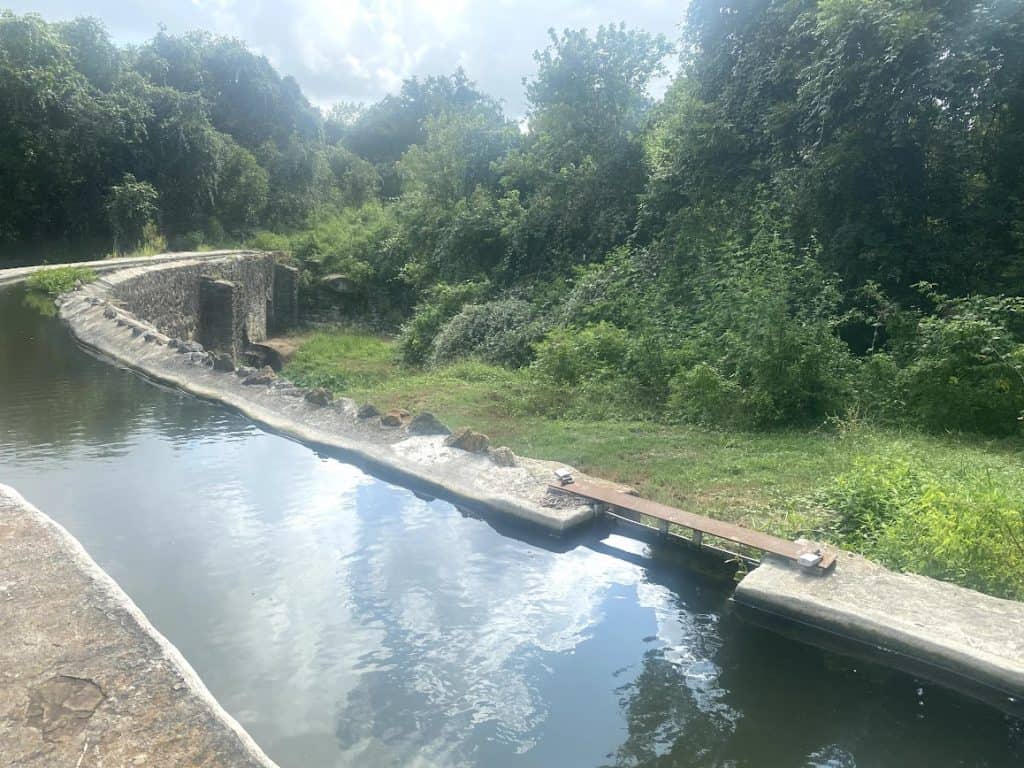
The Espada Aqueduct is a delightful little bonus at the very end of the tour—and the kind of stop you’d almost certainly miss if you were doing this on your own. Like the missions themselves, it’s maintained by the National Park Service, which means it’s well preserved, thoughtfully interpreted, and blissfully uncrowded.
The aqueduct is an impressive feat of engineering, designed to carry water to Mission Espada, and it’s quietly remarkable in that “how did people build this without modern tools?” sort of way. Even better, it’s set in a peaceful, green area far from traffic and tour-bus chaos. After a morning of history, architecture, and big ideas, it’s a calm, grounding place to pause.
It’s the perfect way to end the missions tour—reflective, scenic, and just off the beaten path enough to feel like you discovered something special.
👉: This stop alone is reason enough to book the missions tour—reserve it in advance so you don’t miss this serene final moment.
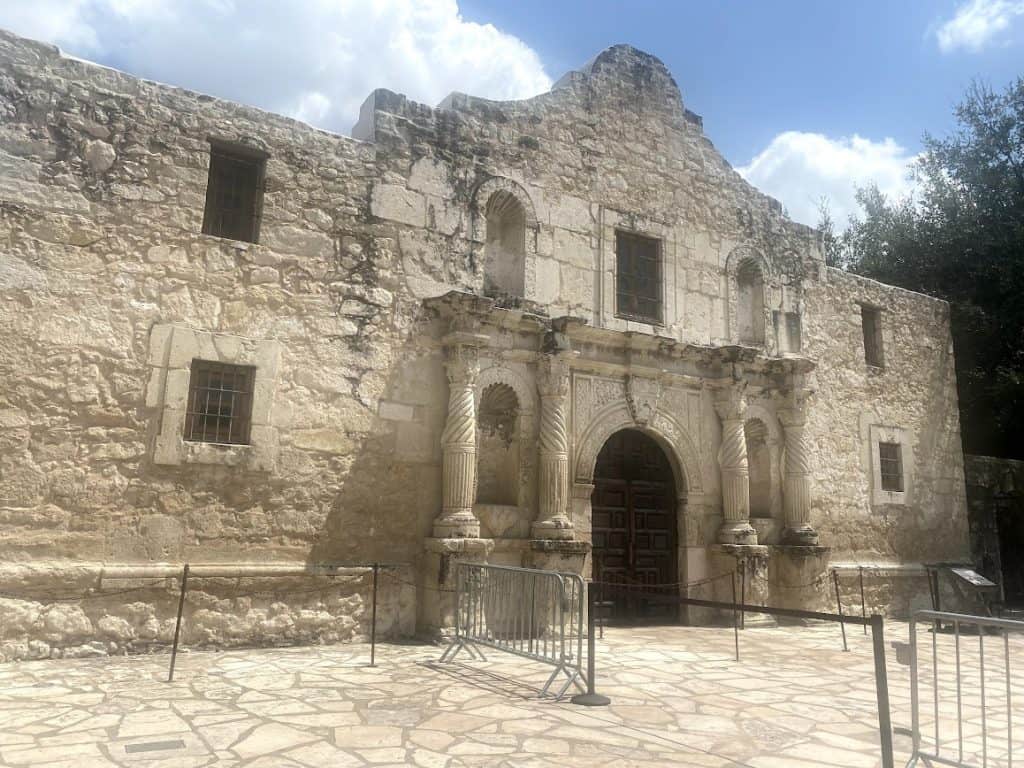
🕰️ Afternoon: Remember the…
We’ve had a fantastic morning touring the missions, but we still have one mission left—the most famous mission of them all.
I am, of course, referring to Mission San Antonio de Valero.
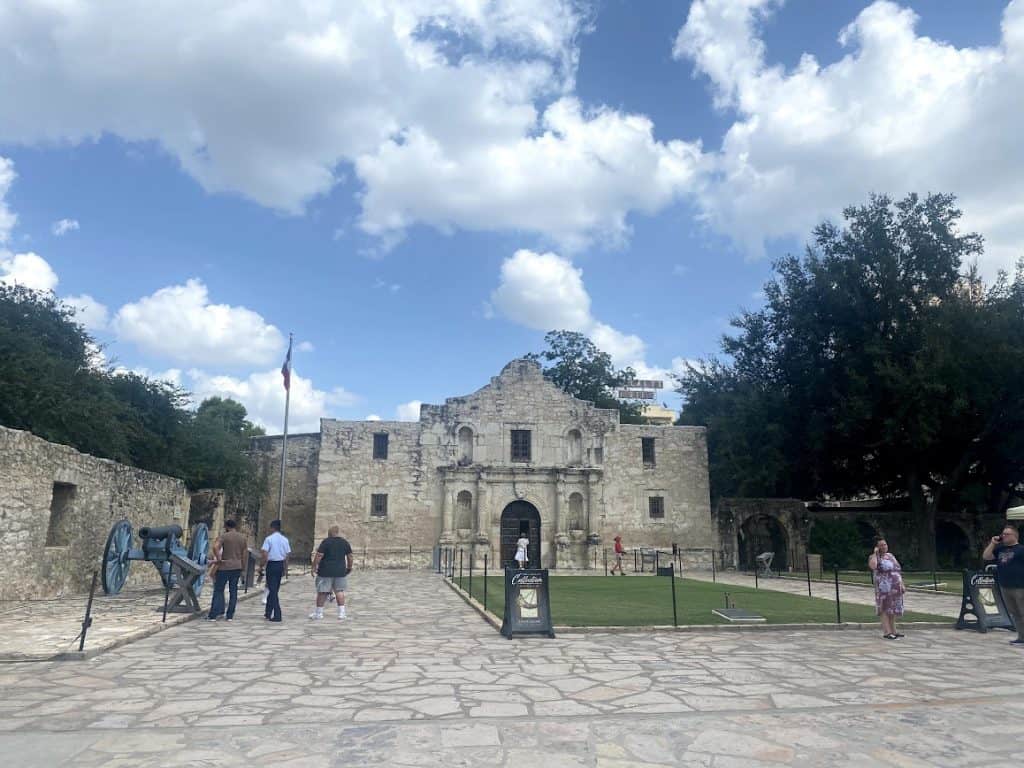
Oh, you haven’t heard of that one? Perhaps that’s because it’s more commonly known as… the Alamo.
It’s the Maine! No, it’s the Fifth of November!
No—wait—that’s it. The Alamo.
There’s a reason the Alamo looms so large in Texas history. Originally a mission-turned-garrison for the Mexican army, it became the site of one of the most pivotal battles of the Texas Revolution.
Quick context refresher, Internet Stranger: Texas once belonged to Mexico, and Mexico had previously been part of Spain. After Mexico won its independence from Spain, Texas remained Mexican territory—until about fourteen years later, when Texas decided it would also like to try its hand at independence.
At the time, Mexico was led by Antonio López de Santa Anna, usually called Santa Anna for short. When Texan rebels seized San Antonio, Santa Anna responded by unleashing absolute chaos on the defenders stationed at the Alamo.

To make a long (and very grim) story short: the Texans at the Alamo lost, and almost all of them were killed very dead. But later, when Santa Anna faced other Texan forces led by Sam Houston, the tables turned.
As Houston’s troops won decisive victories, they rallied around a now-legendary phrase: “Remember the Alamo.”
And that is why this site remains sacred ground for Texas patriots to this day.
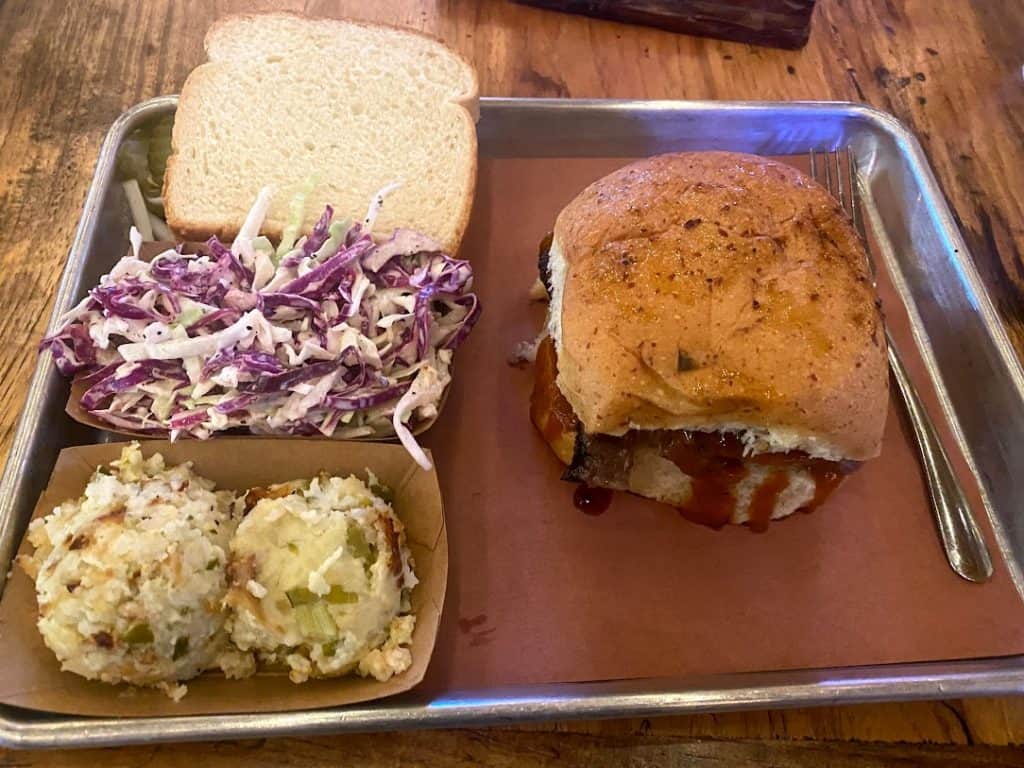
🌮 24-Hour Treat: BBQ at Pinkerton’s Barbecue
If there’s one thing Texas is universally famous for, it’s barbecue. And if you ever feel the urge to tell a Texan that another state does barbecue better—don’t. I triple-dog dare you not to.
If you’re craving great barbecue near the Alamo, Pinkerton’s is the move. You can order by weight or go the much easier route and get a sandwich. I strongly recommend a brisket sandwich, because it’s delicious and practical.
For sides, get one cold (the crispy coleslaw) and one hot (the peppy, cheesy jalapeño rice bowl). Your belly will be full, your spirits high, and you’ll be properly fueled for patriotism.
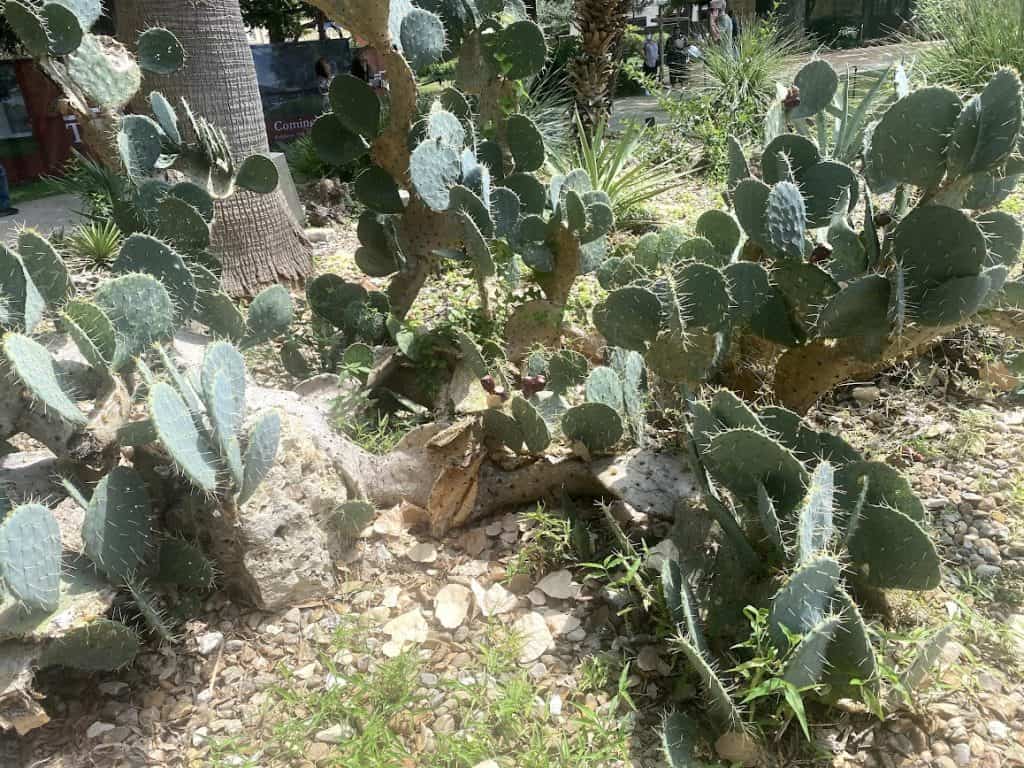
🏛️ 24-Hour Treasure: Ranger Tour of the Alamo Grounds
I absolutely adored the ranger-led tour of the Alamo battlefield. It’s the best way to understand why this battle mattered—not just what happened, but how geography, timing, and sheer stubbornness shaped the story Texans still tell today.
If you want to take this tour, be sure to check the Alamo website for current times and costs. It’s definitely worth it.
And if you’re still not convinced…
allow me to entice you with—
THREE FUN FACTS ABOUT THE ALAMO
(History, but make it delightful.)
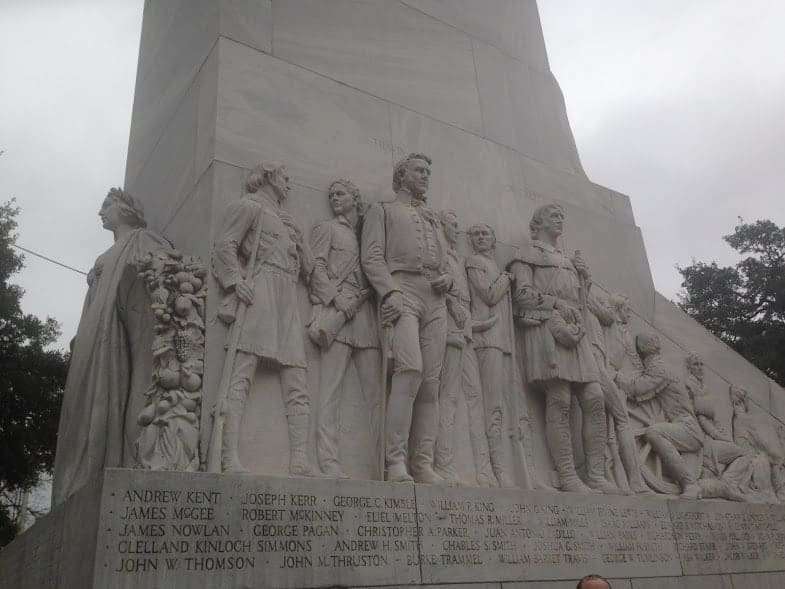
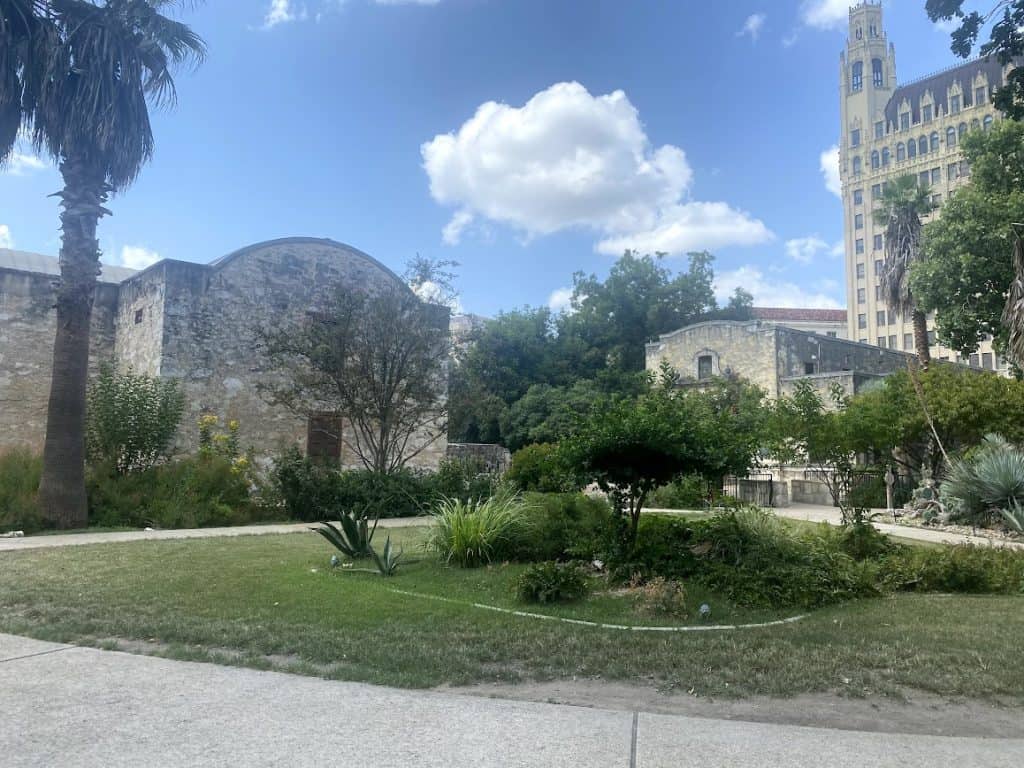
1) Who died at the Alamo?
The most famous Texan to die at the Alamo was Davy Crockett—a native of Tennessee (the greenest state in the land of the free).
Before becoming a larger-than-life frontier legend, Crockett served as a member of Congress during the presidency of Andrew Jackson. He eventually lost his seat because he refused to support Jackson’s deeply odious Indian Removal Act. When that happened, Crockett allegedly stood up in front of Congress and declared:
“You may all go to Hell. I will go to Texas.”
Reader, I bought a bumper sticker with this quote at the Alamo gift shop—even though I do not own a car. I simply felt it was morally necessary.
If you don’t love Davy Crockett after hearing that story, I regret to inform you that there may be no hope for you.
2) Who else died at the Alamo?
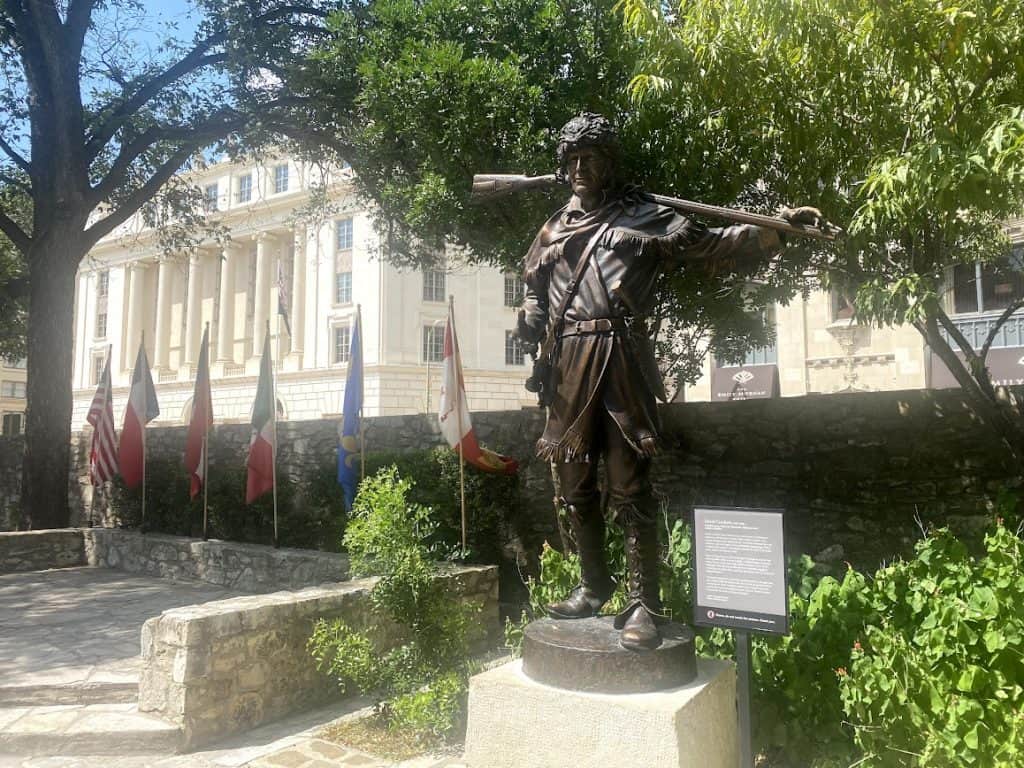
Not all the Texans who fought—and died—at the Alamo were as universally lovable as Davy Crockett. For example, allow me to introduce James Bowie.
(Please.)
James Bowie was a slaveowner. He was a drunkard. He was an associate of Jean Lafitte, an actual pirate. And during the course of a duel, he once disemboweled a sheriff.
Yes.
DISEMBOWELED HIM.
WITH A KNIFE.
That, Internet Stranger, is why the Bowie knife is named after him. Which is honestly devastating news, because for years I assumed it was named after David Bowie—a vastly cooler and significantly less stabby individual.
History is full of heroes.
History is also full of this guy.
3) Did anyone live after the Alamo?
Despite the popular myth, not everyone at the Alamo died in the battle. Many of the Texan defenders were slaveowners—not just Bowie—and one of the few known survivors was Joe, who was enslaved by William B. Travis, one of the commanding officers at the Alamo.
Joe survived the battle and later provided a firsthand account of what happened during and after the conflict. It’s largely because of his testimony that we know how Antonio López de Santa Anna treated the Texans during and following the siege. His account is a reminder that much of what we know about history survives because of people whose names are often left out of the story.
Once you’ve finished your ranger-led tour of the grounds, I highly recommend taking the self-guided audio tour inside the Alamo itself. The interior is small, and photography isn’t allowed, but stepping inside such a significant place in American history feels quietly momentous.
One of the displays that stayed with me the most was a collection of flags representing the states and countries the men who died at the Alamo came from. It’s a subtle but powerful reminder that the story of the Alamo—like so much of history—is more complicated, more international, and more human than the slogans suggest.
💡 24-Hour Tip
If someone tells you that your stolen bicycle is in the basement of the Alamo, do not believe them.
The Alamo does not have a basement.
(This has been a public service announcement.)
🌊 24-Hour Treasure: The San Antonio River Walk
Do I like rivers?
Do I like walks?
I’ve got two legs and a heart, don’t I?
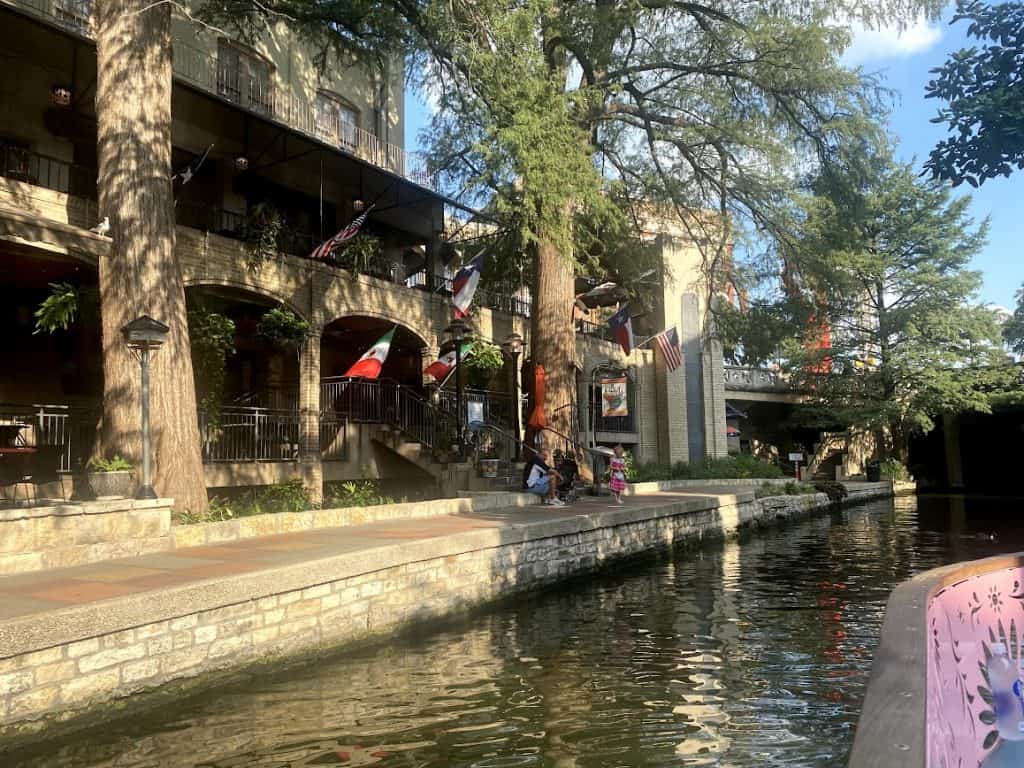
After a long day of Texas history, Texas food, and shopping for Texas objects I absolutely did not need, nothing is more relaxing than watching the sun set over the San Antonio River Walk.
But what is the River Walk, you ask, Internet Stranger? I feel like you should be able to puzzle this out on your own. It is a long, winding pedestrian walkway built along the San Antonio River—lush, serpentine, and constantly expanding. You could spend an entire day exploring it… but I don’t recommend that, because wandering along a river at 2 a.m. feels like tempting fate.
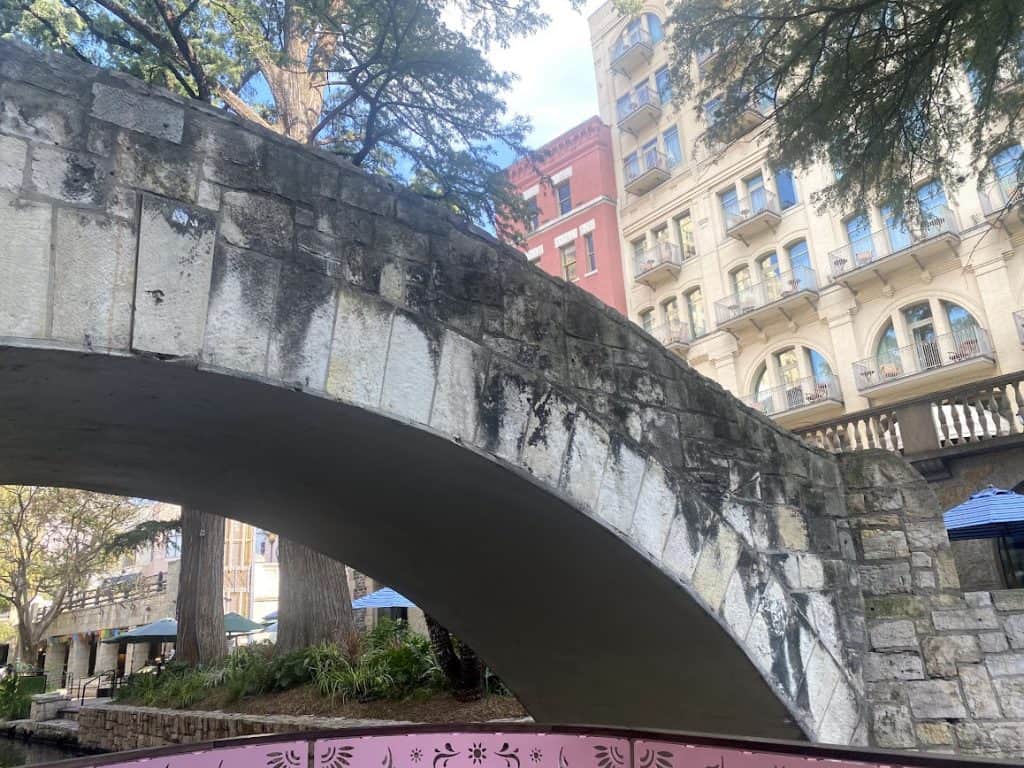
Instead, I suggest buying a ticket for one of the 35-minute river cruises. It’s a calm, breezy way to see the city without committing to an aggressive step count. The boats can be crowded—but not always.
When I cruised the Rio San Antone, there was only one other lady on the boat with me. Our guide kept shouting to passersby that we had bought out the entire boat and that “these two ladies are total ballers.”
And that’s right.
I am a total baller.
And now all of San Antonio knows it.
🌙 Evening: Dinner at Mixtli
We are ending Day One on a high note, and by “high note” I mean one of the best meals you can eat in San Antonio.
Mixtli is my favorite restaurant in the city. And yes, I have been to at least ten San Antonio restaurants, so you should absolutely trust me. But if you’re the kind of person who prefers institutional validation, Mixtli has also been honored by the James Beard Awards, so you can trust them too. A coalition of experts agrees with me.
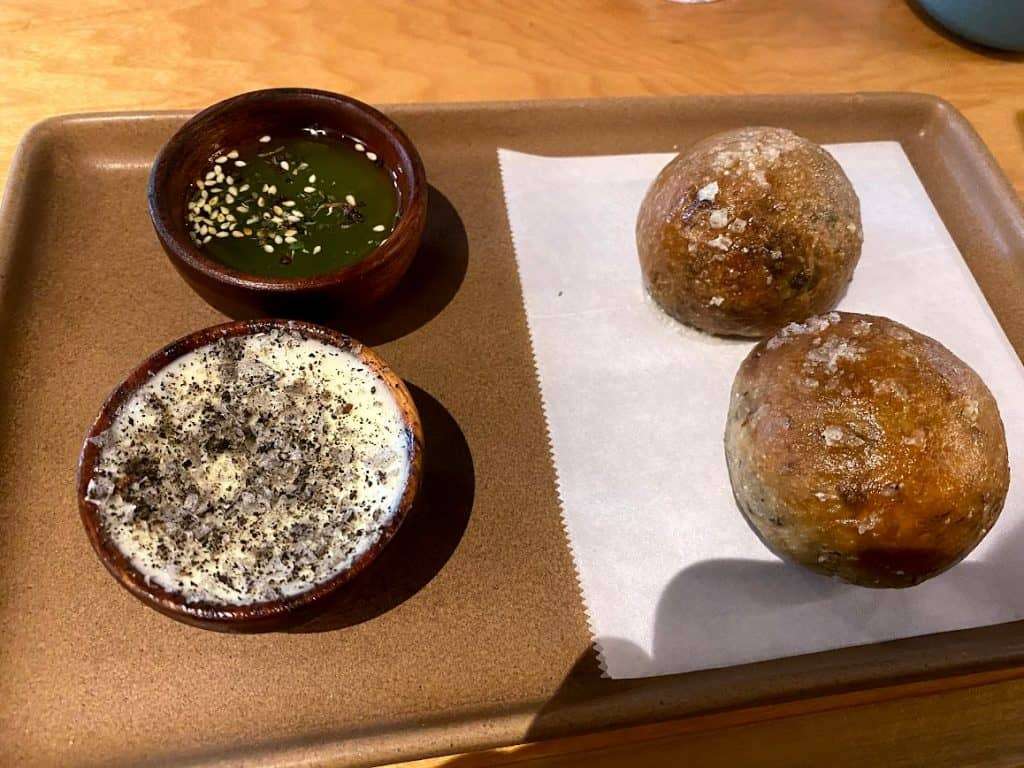
Mixtli is a tasting menu restaurant, which means there is no menu. You simply show up, surrender control, and allow very talented people to feed you extraordinary Mexican food. The menu changes regularly, so you won’t eat exactly what I did—but let me give you a sense of the adventure.
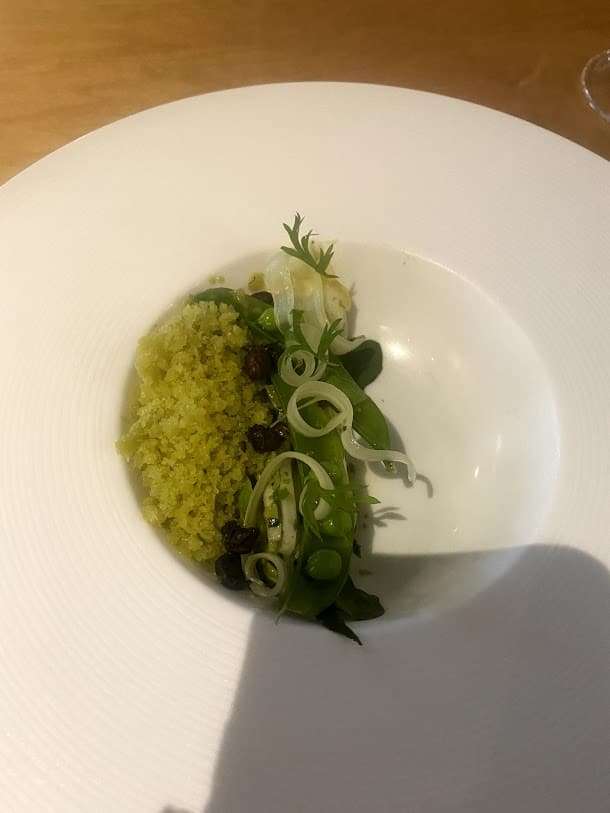
My first course set the tone immediately: snap peas, squash, serrano chile… and flying ants. Yes, flying ants. They’re a Mexican delicacy and add a delightful crunch. Right out of the gate, Mixtli was letting me know: this meal is for adventurous eaters. Message received.
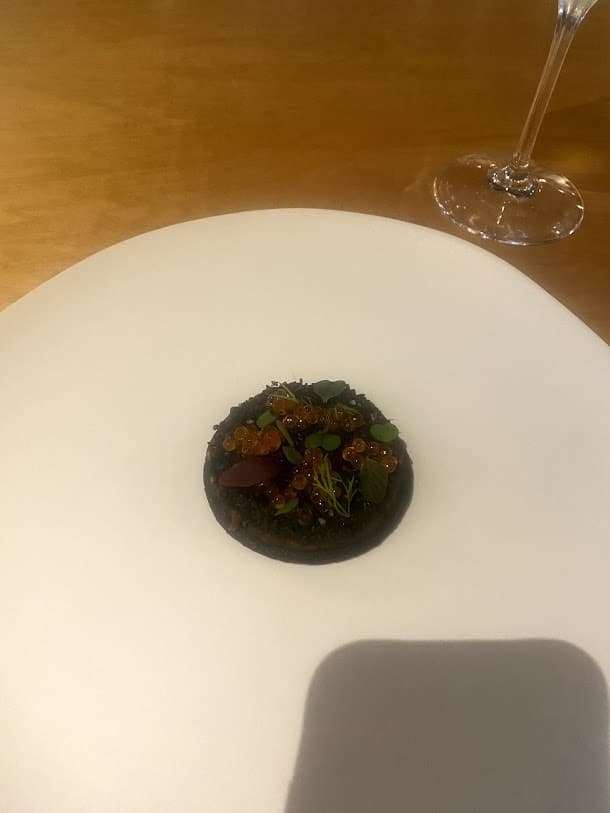
Next came a gorgeous seafood appetizer with mussels and trout roe. My favorite detail was the use of squid ink in the masa, which turned it black and gave it a briny, ocean-kissed flavor. Absolutely inspired. I was officially locked in.
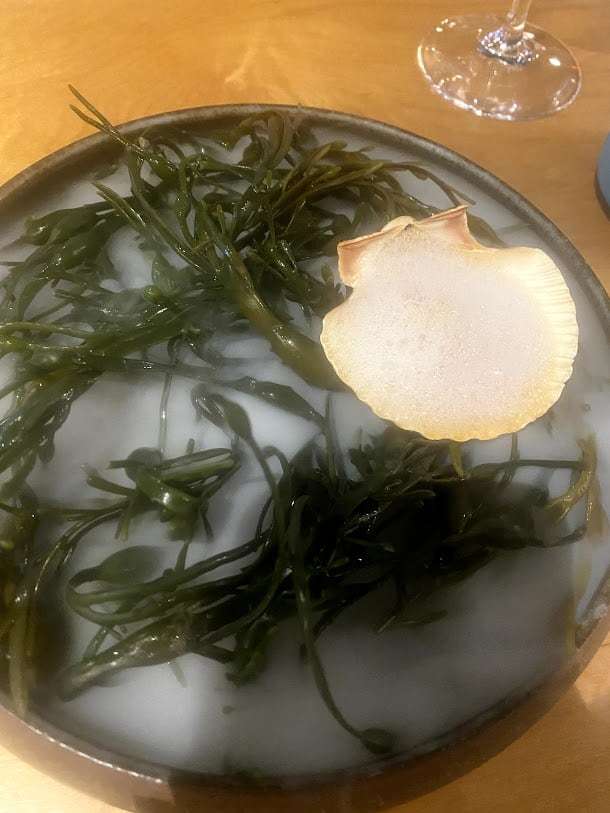
Then came a scallop so perfect it barely lasted a bite—two, if you count the very important butter-sauce slurp. Pro tip: do not eat the seaweed garnish. I absolutely would have tried, but the waiter intervened, heroically.
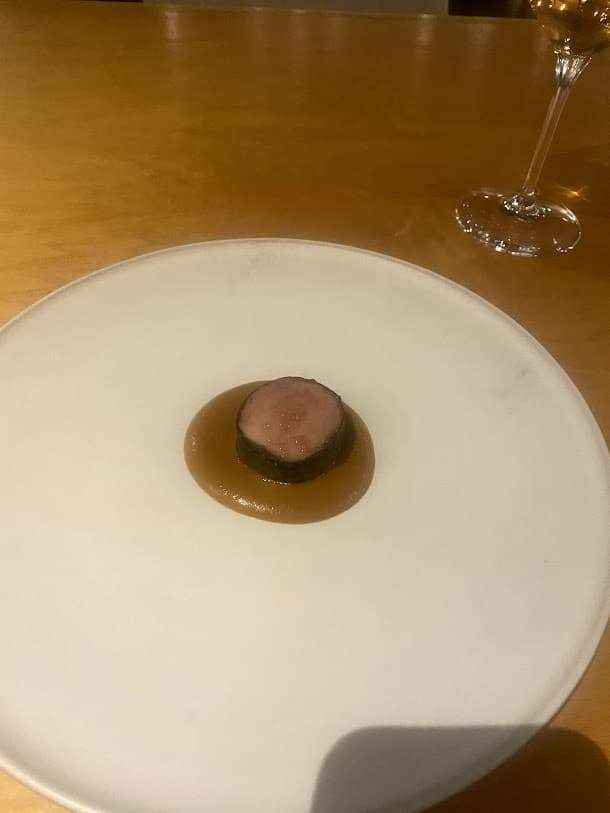
As the courses grew more substantial, we were served tender Iberico pork with peanut mole and hoja santa, a leaf that tastes faintly like eucalyptus. Almost every dish featured at least one ingredient I had never tried before, which is saying something because I have tried a lot of foods.
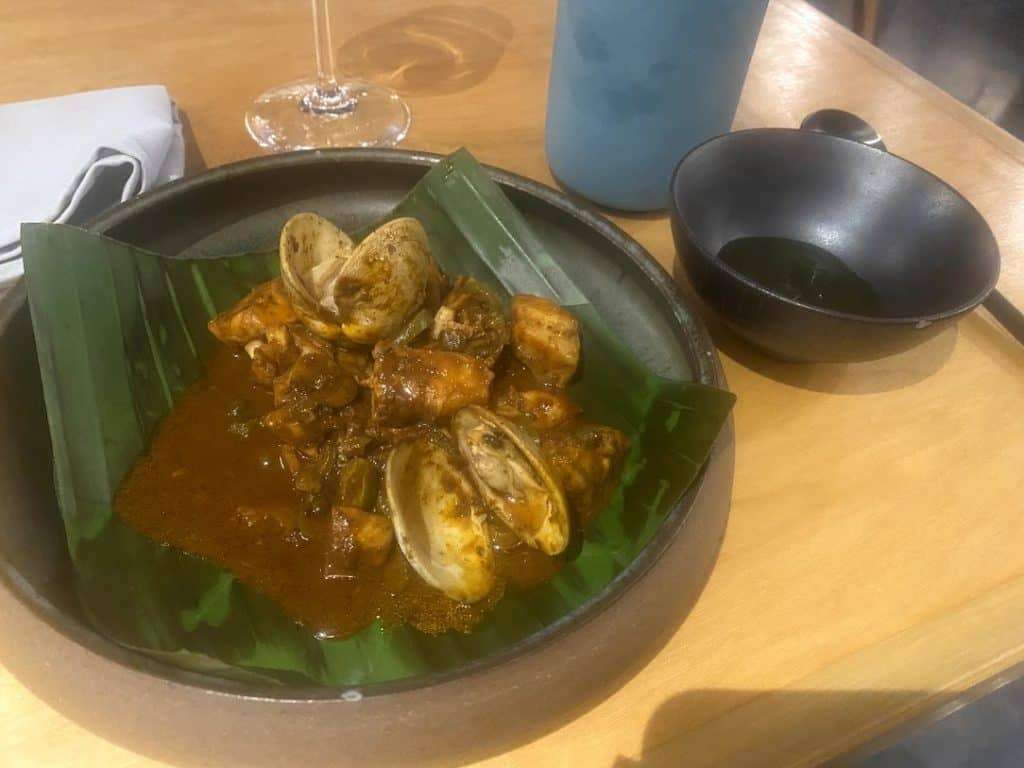
Another standout: seafood barbacoa. I’ve had barbacoa before, but never seafood. This version came with olives, clams, seaweed salsa, and a blue corn tortilla. It was spicy, briny, and deeply more-ish—the olives adding that “just one more bite” magic.
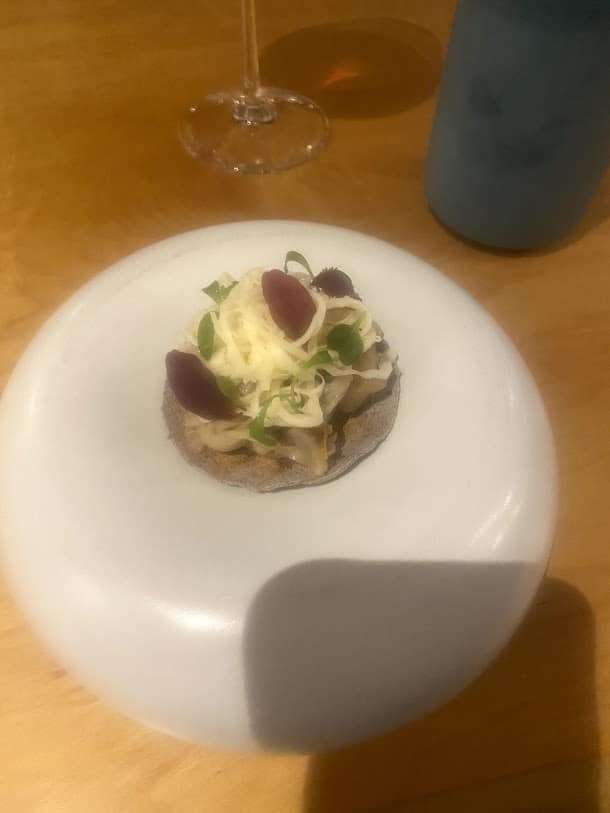
After the heaviest course, we shifted gears with a snack: a white bean and pickled mushroom tostada topped with white cheese. This cheese, I was told, is a rare variety found only in Oaxaca—which also happened to be the theme of the entire menu. I loved it. No notes.
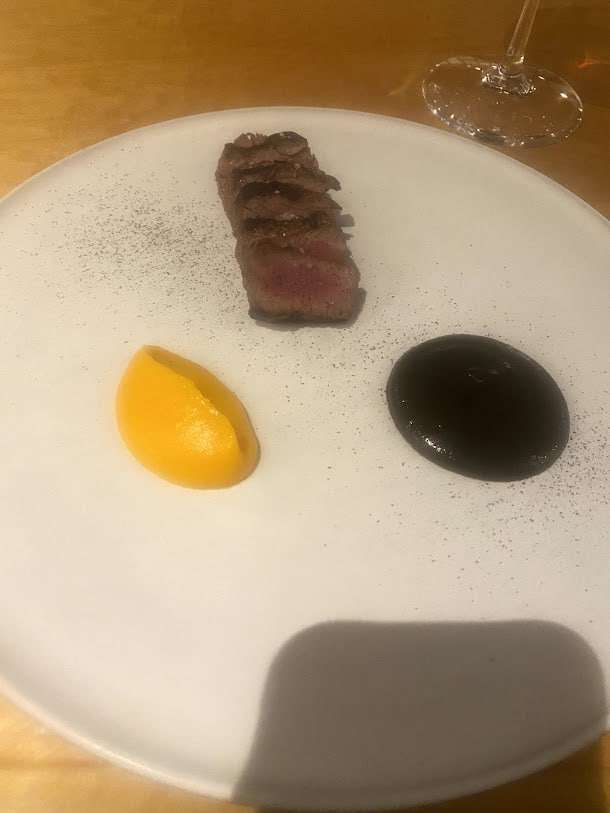
Our final savory course was ribeye with sweet potato and a special-occasion black mole. One of my favorite things about this meal was getting to try so many different moles in one sitting. And let’s be honest—it’s Texas. The ribeye was excellent.
As tradition dictates, a palate cleanser followed: a lemon thyme granita with yogurt sorbet. I do not fully understand how yogurt can become sorbet, given the dairy situation, but this is probably why I am not a tasting-menu chef.
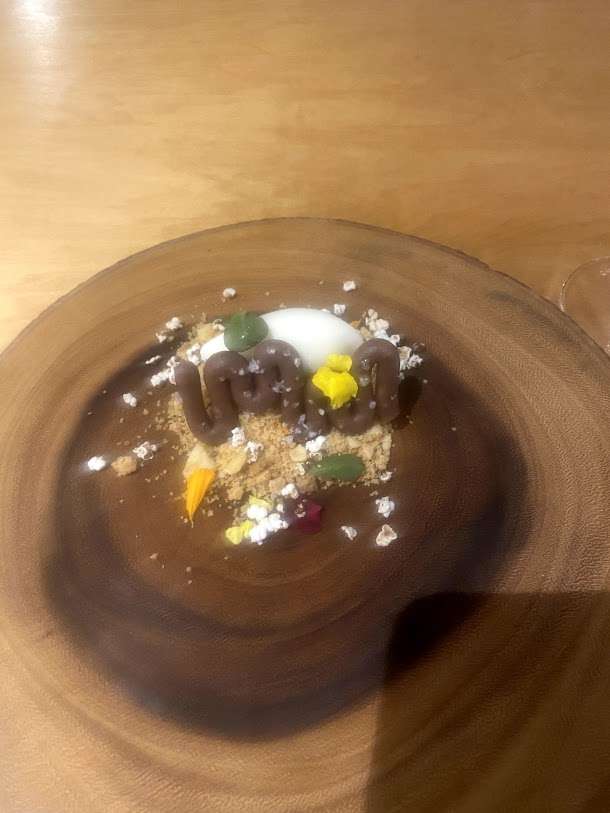
Dessert brought us home with corn masa pudding, Oaxacan chocolate, and popped sorghum—a corn-chocolate explosion I did not know I needed, but now refuse to live without.
Dinner at Mixtli isn’t just a meal. It’s a story, a geography lesson, and a reminder that Mexican cuisine is endlessly creative, deeply regional, and very much alive. A perfect ending to a history-filled San Antonio day.
🌄 Day Two: Presidents, Pastures & Supper (Literally)
If Day One in San Antonio was all about missions, battles, and moles, Day Two is about getting out of town—because sometimes the best way to understand a city is to temporarily abandon it.
Today we’re heading into the Texas Hill Country to learn about one of the most powerful—and frankly most Texan—presidents the United States has ever produced: Lyndon B. Johnson. This is a day of wide-open landscapes, big history, and the kind of scenery that makes you want to stare thoughtfully out a bus window like you’re in a prestige biopic.
The LBJ and Hill Country tour is the perfect counterbalance to yesterday’s urban history. We’ll trade cobblestones and riverbanks for ranch land and rolling hills, and get a deeper sense of how place shapes power. (Spoiler: growing up in Texas will absolutely do that.)
And because we believe in balance—and dinner reservations—we’ll end the day back in San Antonio with a meal at Supper. Yes, that’s the restaurant’s actual name. No, I will not stop finding that funny. After a full day of presidential history and pastoral scenery, it’s the perfect place to sit down, relax, and reflect on everything we’ve learned… preferably over something delicious.
Big skies, big personalities, and a very appropriately named dinner to close it all out—Day Two understood the assignment.

🌅 Morning: Lyndon B. Johnson Sights
Our Hill Country adventure begins with presidential history, because the Texas Hill Country’s most famous (and proudest) native son is undoubtedly Lyndon B. Johnson, the 36th President of the United States.
Any proper tour of the region has to introduce you to the life, times, and unapologetically outsized personality of LBJ—also known as Mr. All the Way. This is a man who did nothing quietly, thought small thoughts were for other people, and left fingerprints all over both Texas and American history.
The Hill Country has more than enough Johnson to satisfy even the most curious history nerd (hi, it’s me). From boyhood roots to presidential retreats, this tour puts LBJ back into the landscape that shaped him—and trust me, it makes everything about his presidency make way more sense.
And the best part? You don’t have to navigate winding country roads, rental cars, or mysterious ranch signage on your own.
👉 : Book the LBJ & Texas Hill Country tour in advance—it’s the easiest and most informative way to see presidential history without doing the driving.
Which brings us to…
Approximately Top 5: LBJ Edition
(Big personality. Big legacy. Big Texas.)

1) LBJ’s Childhood Home
Lyndon B. Johnson—LBJ, as everyone called him—grew up in Johnson City, and our first stop was his boyhood home.
Because the house is part of the National Park Service, it’s staffed by a ranger who shows you around. Our guide—whom I shall refer to as Mr. Ranger (not his actual name)—walked us through everything from LBJ’s childhood bedroom to the charmingly named “sleeping porch” at the back of the house. Apparently, Texas summers were sometimes so hot that sleeping indoors was simply not an option. Extremely relatable.
Seeing where LBJ grew up makes him feel less like a monument and more like a human being who once tried to survive Hill Country heat without air conditioning.
⭐ Fun Fact
LBJ’s mother was a college graduate, which was not at all typical for women of her time. Johnson often credited her with instilling in him a deep respect for education—something that would later shape major parts of his presidency.

Next up: LBJ Ranch in Stonewall.
If you’re on a guided tour, your driver will handle getting the permit to drive on the ranch—no stress, no paperwork, no mild panic. If you’re visiting on your own, you’ll need to pick up a free driving permit at the LBJ State Park and Historic Site Visitor Center before heading out.
Either way, you’re in for some serious presidential real estate.

2) LBJ and Lady Bird’s Eternal Repose
Don’t skip the cemetery at the LBJ Ranch, where Lyndon B. Johnson and Lady Bird Johnson are buried. You can’t get especially close to the graves, but even at a distance, I found it genuinely moving to stop, stand quietly, and pay my respects.
After a morning of learning about LBJ’s childhood and his outsized presence in American history, this stop feels grounding. The noise drops away. The ego disappears. What’s left is the end of a very human life.
Johnson was far from a perfect president—history makes that abundantly clear—but I do believe he genuinely cared about helping the poor. And honestly? That alone distinguishes him from a great many politicians, past and present.
It’s a simple stop, but a meaningful one—and a reminder that even the biggest personalities eventually return to the Texas soil that shaped them.

3) The Junction School
My favorite part of the Junction School was seeing the tiny, one-room schoolhouse where Lyndon B. Johnson was educated when he was just four years old.
The building is small and modest, but there are signs throughout explaining the history of the Junction School and why it mattered so deeply to LBJ. Johnson adored his teacher here, Katie Deadrich, and he never forgot her influence. Years later, when he signed the Elementary and Secondary Education Act into law—a piece of legislation that fundamentally expanded access to public education—he insisted on doing it right here, at the Junction School, with an elderly Miss Katie standing beside him.

I usually have a joke for everything.
This time, I did not.
I burst into tears reading that story.
It is every teacher’s dream to know they mattered—to know they changed a student’s life. Now imagine discovering that the small child you once taught went on to become President of the United States… and chose you and your classroom as the place to enshrine his belief in education forever.
You go, Miss Katie.
Honestly. You go.

4) Touring the Texas White House
The Texas White House is Lyndon B. Johnson’s ranch in Stonewall, and he loved it so much that even after becoming president, he regularly had Air Force One fly him back to Texas. Because LBJ spent so much of his presidency here, the ranch earned the nickname “the Texas White House.”
Honestly? Extremely on brand.

Out front, you can see the smaller plane that once ferried LBJ between Texas and Washington. It’s affectionately known as Air Force One Half, which is both adorable and deeply dad-humor presidential. After peering inside the plane, head into the Airplane Hangar to purchase your ticket for a nominal fee. (If you’re on a guided tour, your driver will take care of this for you—yet another reason guided tours are the MVP.)
Unfortunately, the Texas White House itself is temporarily closed for repairs. A tragedy, yes—but when it is open, the tour is reportedly more fun than a barrel of Texas Longhorns. A ranger leads you through an edutaining walkthrough of the home of the only U.S. president to be portrayed on screen by Randy Quaid, Bryan Cranston, Tom Wilkinson, and Woody Harrelson.
That is range. That is gravitas. That is LBJ.
Sadly, photography isn’t allowed inside the ranch—but I will attempt to make up for that lack of visuals with something even better…
THREE FUN FACTS ABOUT LBJ
(Presidential chaos incoming.)

1) What’s the strangest thing at the ranch?
Inside the ranch, there’s a pecan pie on display—which is not something you expect to encounter while touring a presidential home. Naturally, the ranger asked us what we thought the significance of this baked good might be.
I guessed it had something to do with John F. Kennedy, and for once in my life, I was immediately correct.
On November 22, 1963, Lady Bird Johnson had baked a pecan pie to serve to the Kennedys. After finishing their trip to Dallas, Lyndon B. Johnson and Lady Bird were supposed to host John F. Kennedy and Jacqueline Kennedy at the ranch.
Of course, that visit never happened. Kennedy was assassinated in Dallas, and the pie was never served.
Today, a replica of the pie is kept on display at the ranch in Kennedy’s honor—a small, domestic object standing in for a moment when history could have gone very differently. It’s strange, a little haunting, and unexpectedly moving… which, as it turns out, describes quite a lot of American history.

2) How did Johnson feel about himself?
On a much lighter—and much funnier—note, Lyndon B. Johnson really liked television. Specifically, he liked watching himself on television.
After giving a speech, LBJ would turn on three TVs at the same time and play them simultaneously. According to the ranger, this was because there were only three channels back then—ABC, NBC, and CBS—and this setup allowed Johnson to watch coverage of himself on all of them at once.
Was this about media monitoring?
Was it about message control?
Was it about ego?
Yes.
Honestly, I find this oddly relatable. If I had just given a major presidential address and there were only three channels on Earth, I too might want to know exactly how all three were talking about me.
3) Was LBJ a shy and retiring person?
The Magic 8 Ball says: Doubtful.
My favorite item on the entire ranch is a pillow embroidered with the phrase:
“This is my ranch and I do as I damn please.”
Apparently, it was a gift from a neighbor—someone who clearly had an excellent understanding of Lyndon B. Johnson’s personality and gift preferences. Honestly, that neighbor nailed it.
Regular readers of this blog are welcome—encouraged, even—to gift me a copy of this pillow immediately. It would really tie my whole life together.

💡 24-Hour Tip
Be careful when using the single-stall bathrooms at the Texas White House.
I once opened the door and was greeted by an eight-foot-tall Texan man who had forgotten to lock it. Pants around his ankles, he looked me straight in the eye and yelled:
“WELL, HOWDY!”
He then turned around and calmly went about his business.
I closed the door.
I reflected on my choices.
God bless Texas.

5) LBJ Artifacts
Scattered around the ranch are a few small museum spaces filled with Lyndon B. Johnson’s personal and presidential treasures—and they are not to be skipped.
The standout exhibit for me was the collection of phone recordings from LBJ’s conversations with other major figures of his era. All you have to do is find the display in the Airplane Hangar, pick up a handset, and casually listen in on a real taped phone call like it’s 1965 and you’re a very discreet lamp.
My favorites were his conversations with Harry S. Truman, Martin Luther King Jr., and Richard Nixon—in that order. The Nixon tape is especially hilarious because LBJ is perfectly polite, but you can hear how much he does not like Nixon and is actively trying to get off the phone without starting a diplomatic incident. Relatable.
The other 24-Hour Treasure here is LBJ’s Aquacar—the shiny blue beauty you may have seen in my photo. Yes, this was an actual car that could drive straight into the water and keep going. It feels wildly space-age and deeply impractical, which means I love it unconditionally.
Honestly, why don’t we all have Aquacars?
What happened to innovation?
What happened to dreams?

🌞 Afternoon: Small Towns of the Texas Hill Country
You didn’t take this Hill Country tour only for dead presidents, strange Texans, and aquatic automobiles, did you? Of course not. You’re here for bucolic small-town Texas life—the kind with courthouse squares, creaky porches, and an alarming number of American flags.
Happy to oblige, Internet Stranger.
The afternoon portion of the tour slows things down and lets the Hill Country do what it does best: look charming without trying. We’ll trade presidential legacy for everyday Texas—quiet streets, local shops, and towns that feel like they’re politely daring you to stay awhile.
This is the palate cleanser after a history-heavy morning. No speeches. No legislation. Just small towns doing their thing under big skies.
Which brings us to…
Approximately Top 5: Texas Hill Country
(Prepare for peak wholesome.)

1) Fredericksburg
Enough of presidents. It’s time for the Germans.
After wrapping up at the Texas White House, head straight for Fredericksburg, a Hill Country town so charming it practically demands to be described as “quaint” and “picturesque”—with or without air quotes.
Fredericksburg was settled by German immigrants around the same time that (presumably) other Germans were busy settling San Antonio’s King William District. For reasons I do not understand and do not care to Google, those Germans named their neighborhood after the Kaiser, while these Germans named their town after Prince Frederick of Prussia.
Did they not like the king?
Were they being contrarian?
Was this just a branding decision?
Unclear. Moving on.
Regardless of any potentially seditious naming preferences, these settlers built an adorable town that is now wall-to-wall cute shops, bakeries, wine tastings, and German restaurants serving sausages with extreme confidence. Give yourself about two hours to wander, snack, and consider buying something you absolutely do not need but will justify emotionally.

And finally, a detail that cannot be ignored: the town’s official slogan is “Willkommen, y’all.”
Reader, that is objectively adorable.

2) Lunch at Auslander
Jim recommended that I stop for lunch at Auslander, and I wholeheartedly concur with this excellent life choice. Trust Jim. Jim knows things.
On his advice, I ordered the kasewurst—a spicy sausage with a bit of cheese tucked inside, like a delicious little secret. Reader, it was the best wurst I’ve had in quite some time, which feels like an important personal benchmark.
The sausage came with two sides, and I chose wisely: sauerkraut and warm German potato salad, because they felt the most authentic and I was fully committing to the theme. The flavors were cozy and sweet-and-sour in that deeply satisfying German way, and the whole meal felt like a warm hug after a morning of presidential history.
Between the hearty food, the welcoming atmosphere, and the sense that I was doing Fredericksburg correctly, this was exactly the lunch stop the Hill Country ordered.

3) Shop at Rustlin’ Rob’s Texas Gourmet Foods
The greatest store in Fredericksburg—and quite possibly the entire world—is Rustlin’ Rob’s Texas Gourmet Foods, located at 121 East Main Street.
This is not a normal store. This is a sampling paradise. They offer samples of everything: jellies, salsas, hot sauces, mustards, and flavored peanut butters. If they make it, you are encouraged—nay, expected—to try it. Unlimited samples. No shame. Absolute anarchy.
I regret not buying everything in the store, but if I had to crown a single winner, it would be the raspberry jalapeño jelly. Sweet and spicy is my kryptonite, and this one hit me right in the soul.
Next time I’m in Fredericksburg, I plan to return with a budget, a suitcase, and the intention of buying the entire store. Do not try to stop me.

4) Luckenbach, Texas
Luckenbach, Texas is officially described as a community—because it’s too small to be called a town. According to legend, it has a population of three. And honestly? That feels generous.
Luckenbach was so small that in 1970, a man named Hondo Crouch simply bought the entire community for $30,000. Just… the whole thing. As one does.

Now, I don’t want to sound like a New York chauvinist who believes bigger is automatically better—but I am not generally in the habit of visiting places with a population too small to successfully play a game of bridge. Thankfully, my guide reassured me that Luckenbach is culturally significant, mostly because it was immortalized in the song Luckenbach, Texas by Waylon Jennings and Willie Nelson—an ode to small-town life and simpler times.
Once the song became a hit, Luckenbach transformed into a beloved live music venue. On weekends, people come from all over Texas (and beyond) just to hear bands play in the dance hall. And we got lucky—we were there during an actual concert.
A group of older gentlemen—exactly the kind of fellers you’d expect to see performing in a tiny Texas community—entertained the crowd with gems like:
“I’m a real go-getter—I take my wife to work and then I go get her.”
Reader, I was delighted.

🌟 24-Hour Treasure
The single greatest thing in Luckenbach is the cat who naps in a bucket of T-shirts inside the dance hall gift shop. This feels important to mention.
I sincerely hope no one with cat allergies is planning to buy one of those shirts—because that cat has absolutely claimed them.

5) Texas Wines
I have the perfect final stop for our Hill Country adventure.
Texas is famous for many things: Rangers, Walker, Texas Ranger, presidents, Tommy Lee Jones, and The Last Picture Show. But it is also—surprisingly and delightfully—known for producing excellent wine. I was thrilled that our tour included a stop at one of the local vineyards, because learning history is nice, but learning history with wine is better.
On my tour, we stopped at Signor Winery. You may not visit this exact winery on your trip, but you’ll almost certainly end up somewhere equally charming and delicious. I tasted five different wines, all of which were refreshing and very welcome on a hot Texas summer day.

Signor doesn’t make white wine, but they do offer a rosé and four reds. My personal favorite was the Sangiovese, which immediately made me want a big bowl of pasta and a long Italian dinner I did not have scheduled.
The wine tasting isn’t included in the price of the tour, but I think it’s absolutely worth it. If wine isn’t your thing (or if others in your group are tasting and you’re not), you can grab a snack instead—or simply wander the beautiful grounds and enjoy the scenery. No pressure. This stop is all about choice and vibes.
👉: Book the LBJ & Texas Hill Country tour in advance—between the presidential history, charming towns, live music, and a wine stop at the end, it’s the easiest way to experience the best of the Hill Country in one perfect day.

🌙 Evening: Dinner at Supper
Yes, it is objectively funny to say we’re having dinner at Supper.
But jokes aside, Supper is a wonderful restaurant tucked inside the stunning Hotel Emma—and an excellent way to end Day Two.
You can expect to return from the Hill Country tour between 5:00 and 5:30 p.m., so plan your reservation accordingly. Trust me, you’ll want a seat waiting for you.

My dinner at Supper began with a surprise: a free risotto made with Carolina Gold rice, Parmesan, lemon, and dill. It was creamy, bright, deeply comforting—and did I mention it was free???
Now, I cannot promise you free risotto. I tend to get complimentary dishes because I dine alone, and I suspect restaurants think I’m a food critic. Which… I mean… technically I am? But I also pay for almost all my food myself. Anyway.

On to the appetizer I did order and pay for: an heirloom tomato salad with halloumi cheese and Calabrian peppers. I love a good tomato-and-cheese situation in the summer, but this one had a spicy kick I wasn’t expecting—and very much appreciated.
For my main course, you might be thinking, Ah yes, fried chicken.
Incorrect.
Dead wrong.

This was smoked country-fried quail, and it was unbelievably tender and moist. Even better, the portion size was civilized—unlike the mountainous piles of fried chicken that often defeat me before dessert can even be considered.

Speaking of dessert: my waiter strongly encouraged the sticky toffee pudding, which also happens to be the signature dessert at another beloved San Antonio restaurant, Biga on the Banks. At this point, I think it’s fair to declare sticky toffee pudding the official dessert of San Antonio.
Supper’s version was especially decadent, topped with banana curd. And nothing says “classic British dessert” quite like a curd, now does it?
A cozy room, thoughtful food, and a meal that felt both indulgent and welcoming—dinner at Supper was the perfect, gentle landing after a full day of Hill Country adventures.
🌿 Day Three: Mansions, Masterpieces & a Very Good Dinner
By Day Three in San Antonio, you’re no longer a tourist—you’re a temporary local. You know where the River Walk bends just right, you have Opinions about barbecue, and you’re ready for a day that’s a little slower, a little prettier, and deeply satisfying.
Today is about culture and calm. We’ll start by wandering the elegant King William District, where 19th-century mansions, shady streets, and German-Texan ambition collide in the most aesthetically pleasing way possible. This is the kind of neighborhood that makes you whisper, “I could live here,” even though you absolutely will not be buying a mansion anytime soon.
From there, we’ll head to the San Antonio Museum of Art, because every great trip deserves at least one museum afternoon where you accidentally learn something profound and then immediately sit down because your feet are tired.
And to close out our final day—because we believe in strong endings—we’ll have dinner at Biga on the Banks, a San Antonio classic and a fitting farewell meal. Thoughtful food, refined flavors, and a gentle reminder that you are ending this trip on a high note.
Day Three is graceful. Day Three is cultured. Day Three is saying goodbye to San Antonio with good shoes, good art, and an excellent reservation.
Let’s begin.

🌅 Morning: King William Historic District
The King William Historic District is a neighborhood just south of downtown San Antonio, and it contains some of the most beautiful houses in the United States. I am not being hyperbolic. These homes are stunning—the kind that make you slow your walk, tilt your head, and whisper, “Who lived here and how much did they pay?”
This is the perfect way to start your final day in San Antonio: wandering leafy streets, admiring ornate porches and ironwork, photographing gorgeous architectural details, and—if you’re lucky—encountering weird cats who do not respect property boundaries.

Be kind to the cat featured in my photo if he chooses to welcome you to the King William Historic District. This is his neighborhood. Do not test him. Don’t mess with Texan cats, as they say.
If you’d prefer a bit more structure than simply following your heart (or a mysterious feline guide), I am happy to provide…
Approximately Top 5: King William Historic District
(Architecture, attitude, and just enough chaos.)

1) Anton Wulff House
Start your morning at the Anton Wulff House, because this beautiful home once served as headquarters for the San Antonio Conservation Society. And honestly? You have them to thank for why the King William Historic District looks so impossibly well preserved today.
Without the Conservation Society, many of these grand old houses might have been lost to time, neglect, or—worse—bad renovations. Instead, we get tree-lined streets filled with architectural drama, elegant details, and homes that still know who they are.
If you’d like a little structure to your wandering (highly recommended), a detailed walking tour of the historic houses is available online, making it easy to plot your route and admire responsibly.
Which does make me wonder: what would King William himself make of all this modern technology?
Probably impressed.
Possibly horrified.
Definitely confused by Google Maps.

2) Photograph the Gingerbread Houses
The King William Historic District was first settled by German immigrants in the 1860s, and it is those Germans whom we must thank for the neighborhood’s delightfully gemütlich Victorian gingerbread houses.
These homes are exuberant. Ornate trim. Decorative flourishes. Architectural confidence. Clearly, a number of these German expats did very well for themselves in San Antonio, because these are not modest cottages—they are full-on urban palaces dressed up like desserts.
Which does raise a question.
If the district was settled and named by Germans… shouldn’t it technically be called the Kaiser Wilhelm District? Am I missing something here? Was there a meeting? Was there a vote? Did someone say, “Let’s just go with King William—sounds friendlier”?
Then again, had it actually been called the Kaiser Wilhelm District, I’m sure it would have been swiftly renamed during World War I. I mean, if the British royal family couldn’t keep their original German name, I doubt a bunch of randos in Texas would’ve been allowed to keep theirs.
In any case, the name stuck, the houses survived, and you get to spend your morning photographing some of the most charming Victorian homes in the country—so really, everyone wins.
(Especially your camera roll.)

3) Steves Homestead Museum
Although the German immigrants who settled the King William District were wildly successful in the United States, they never let go of their German heritage. For proof, look no further than the Steves Homestead, which is clearly marked on your walking tour map and absolutely worth a stop.
The house has since been sold to a private owner, so you can no longer tour the interior and snoop around the former residents’ lives in person. However—plot twist—the first time I visited San Antonio, the museum was still open. Which means I am able to share my totally legal, completely above-board photos of the interior with you.
Back when it was open, the house was filled with little reminders of the Steves family’s pride in their German roots. One of my favorite details was a set of German-language napkin hooks, which you can see in my photo. This is the kind of extremely specific domestic artifact I live for.

If there are any German-speaking readers of this blog, I would love your help—please email me a translation of the napkin hooks at
lottehatblaueaugen@aroundtheworldin24hours.com
Crowdsourcing history like a responsible Internet Stranger.

4) Villa Finale
Fortunately for all of us nosy people who enjoy poking around historic homes, the Villa Finale is still open for tours—and it is an Italianate stunner. The docents here are friendly, funny, and clearly having a great time, which means the entrance fee is worth every penny.
The Villa Finale was built in the 19th century, back when the King William District was full of wealthy German residents living their best mansion-owning lives. But—as so often happens—fashion changed, fortunes shifted, and the neighborhood eventually fell on hard times. According to my docents, the Villa Finale itself entered a dark chapter and was, at one point, being used as a house of ill repute.
History is nothing if not dramatic.

Enter our unlikely savior: Walter Nold Mathis—a man with a truly fabulous name and an even more fabulous personality. Mathis was a notorious collector who owned more than 12,000 art objects, many of which rotate through displays inside the Villa Finale.
Do you doubt me? Please enjoy the photographic evidence. This is merely one of his collections.

Mathis didn’t just restore the Villa Finale—he helped revive the entire King William Historic District by restoring other homes and encouraging like-minded history lovers to move in. In other words, we can thank him for saving this neighborhood so that we may all wander it today with cameras, iced coffees, and opinions.

We can also thank him for this absolutely deranged collection of pottery.

And yes—it just keeps going.

5) The Guenther House
The Guenther family was yet another German clan that settled in the King William District, and they made their fortune in flowers.
No—wait. That can’t be right.
They made their money in flour.
That makes much more sense, seeing as everyone eats flour and not everyone eats flowers (though I admire the commitment).
Today, you’re the lucky one. You can tour the Guenther House for free, or you can do what I suggest and enjoy some extremely tasty baked goods made with wholesome Guenther flour at the on-site restaurant. In fact, this is exactly where I recommend stopping for lunch.

You simply must experience Guenther flour in its highest form by ordering the fluffy biscuits with real sausage gravy. Your arteries may not thank me for this recommendation, but your tummy absolutely will.
To round things out, I suggest adding:
- a scrambled egg
- a side of tender bacon
- and some very Texas-appropriate jalapeño
It’s a little sweet and a little spicy—just like I like my men.

🌟 24-Hour Treasure
One of my favorite things about visiting San Antonio around Christmas is seeing the historic homes decorated for the season. The Guenther House shop even had a gingerbread house on display—modeled after the homes in the King William District.

And while the real houses are beautiful…
this one is better.
Because you can eat it.

🖼️ Afternoon: San Antonio Museum of Art
Now that we’re properly fed (and emotionally supported by biscuits), it’s time to scoot on over to the San Antonio Museum of Art—the ideal place to spend an afternoon in San Antonio for one very practical reason: it gets aggressively hot here, and this museum is extremely air-conditioned.
Truly heroic air conditioning.
The San Antonio Museum of Art boasts an impressively wide-ranging collection, exactly what you’d expect from one of America’s largest cities. Ancient art, modern art, things you recognize, things you absolutely do not recognize but will nod thoughtfully at anyway—it’s all here. You can wander at your own pace, duck into galleries when your feet allow, and sit down whenever the spirit (or your calves) move you.
I can’t possibly walk you through every single collection—this place is vast, and I respect both your time and my word count. But I can share a few highlights that made my visit especially memorable.
Which brings us to…
Three Fun Facts: San Antonio Museum of Art
(Art, but make it breezy.)

1) Is all the art from Texas or something?
Absolutely not, Internet Stranger. The San Antonio Museum of Art has a surprisingly strong ancient art collection, and I highly recommend starting here before your brain gets tired.
One of the standout objects is a set of authentic Egyptian canopic jars, which once held the preserved organs of a man named Pekh-abekh-neith. Yes—his actual organs. Carefully removed. Stored in jars. Topped with animal heads. As one does.
I often wonder how Pekh-abekh-neith would feel knowing that thousands of years later, people know his name solely because they’ve stood in a museum staring at the jars where his organs used to be. History is humbling like that.
So, Internet Strangers, let me make a small request: please remember my name—Stella Jane—for reasons entirely unrelated to posthumous organ storage. I would prefer my legacy involve writing and travel rather than jars and viscera.

My other favorite piece in the ancient collection is a Greek jar with a man’s face on it, and wow—this guy looks deeply skeptical. Like he’s judging you, the museum, and the concept of olives all at once. I’m convinced he was the life of every ancient Greek party, leaning against a column and muttering devastating commentary under his breath.
Ancient art: educational, profound, and occasionally very relatable.

2) What’s the best collection at the museum?
That’s obviously a subjective question, but my personal favorite collection at the San Antonio Museum of Art is the Japanese art.
Exhibit A: the extremely cranky-looking gentleman in my photo, Aizen Myō-ō, one of the guardian kings of Buddhist truth. Look at that face. He is not here to play games.
Apparently, Aizen Myō-ō’s image was considered so powerful that it was traditionally kept hidden from sight most of the time. And while I respect the spiritual reasoning behind that, I do think it’s a little unfair—he’s so striking and beautiful that everyone should get to admire him whenever possible.
On the other hand… a sacred statue that is wrongfully relocated to an art museum in San Antonio and then begins cursing random visitors feels like an excellent horror movie premise. Hollywood, call me. You could name it Art Attack. I’ll wait.

The Japanese collection also includes a stunning set of folding screens, especially this shimmering image of cherry blossoms, which is both serene and extremely practical. Because if the statue does come to life and starts attacking museum-goers, you can simply duck behind the screen and hope for the best.
Art appreciation is about beauty, spirituality, and—occasionally—having an escape plan.

3) OK, but what about the American art?
Oh, there’s plenty of American art—and it’s excellent.
My favorite piece in the American collection is Archibald Motley’s Bronzeville at Night. Bronzeville is a historically Black neighborhood in Chicago, and Motley brings it to vibrant life here. The painting is full of movement, music, and joy—you almost feel like you could step right into the scene and join the dancers.
Which would be a lovely change of pace after narrowly escaping a cursed Buddhist statue.

If you’re in the mood to broaden your scope, don’t skip the South American art either. One standout is a 19th-century Bolivian painting of San Isidro Labrador. San Isidro is a farmer and a popular subject in Spanish colonial art, and I’ve seen many versions of him in New Mexico, where he’s usually depicted as humble, simple, and very much a man of the fields.
That is not what’s happening here.
This San Isidro looks like he’s doing extremely well for himself. The clothes are fancy. The posture is confident. I find it hard to believe he’s plowing his own fields in those pants. Good for him, honestly.
Between American modernism, South American colonial painting, and ancient artifacts that may or may not come to life, the San Antonio Museum of Art really delivers a little bit of everything—and does it with air conditioning.

🌙 Evening: Dinner at Biga on the Banks
Biga is frequently ranked among the top fine-dining restaurants in San Antonio, and it’s conveniently located right on the San Antonio River Walk—which means you can stroll over feeling cultured and unhurried. The cuisine here is New American, which I take to mean locally sourced, seasonal ingredients paired with inspiration borrowed cheerfully from cuisines all over the world.
It’s a real classy joint, so maybe leave the Texas tuxedo at home.
I started with a light and refreshing Texas watermelon and pork belly salad. I had never even heard of Texas watermelon before, but it turns out it’s exceptionally sweet and vibrantly red—much like the heart of Davy Crockett, may he rest. I wish I could find this salad more easily back home in New York, but alas, I suspect it would not survive the journey.

For my main course, I ordered the Hill Country venison with grilled quail. Think surf ’n’ turf—but replace the seafood with a bird.
Bird ’n’ turf?
Wing ’n’ hoof?
Meat ’n’ clawed feet?
I feel like there’s a better name for this, but regardless, it was excellent.
The local venison was my favorite part: rich, deeply flavorful, and not at all gamey. I also loved the supporting cast—a goat cheese tart and crispy Brussels sprouts that made the whole plate feel like a Thanksgiving feast, but better, because I didn’t have to interact with any of my relatives.

The signature dessert at Biga is their sticky toffee pudding, served with crème anglaise—and it did not disappoint. The pudding itself is beautifully shaped, the kind of dessert that looks like it could be presented to royalty without embarrassment. Despite the richness of everything I’d eaten that day, it wasn’t too heavy to enjoy comfortably.
Germany for lunch.
England for dessert.
San Antonio for the win.
And with that, we close out our third—and final—day in San Antonio exactly the way we should: well-fed, well-rested, and deeply impressed.
🤠 Three Quirky Questions About San Antonio
- If you had exactly one day in San Antonio, would you spend it eating tacos, learning Texas history, or floating dramatically down the River Walk like a legend?
(There is no wrong answer. But there are revealing answers.) - Which San Antonio icon speaks to your soul the most: the Alamo, the Missions, the Hill Country wine, or the random cat who definitely owns the King William District?
Choose carefully. This says a lot about you. - Be honest: would you rather end your day with barbecue, sticky toffee pudding, or a tasting menu that includes flying ants and changes you forever?
No judgment. OK, maybe a little.
💌 Now it’s your turn, Internet Stranger!
Email me your answers at stellajane@aroundtheworldin24hours.com. I read every message, I love hearing from you, and I may or may not judge your choices silently while nodding approvingly. And thank you for visiting Around the World in 24 Hours.
And that’s 24 Hours in San Antonio—three ways, countless vibes, and zero basements at the Alamo.
Until the next adventure ✨