This post contains affiliate links. As an Amazon associate, I earn from qualifying purchases.
Greetings Internet Stranger! I’m Stella Jane, and welcome to 24 Hours in Indianapolis. Did you know Indy is one of the 20 biggest cities in the United States by population? I know, right? Everyone’s out here hyping Denver, Seattle, Boston, and DC like they’re Beyoncé, but surprise! Indianapolis has more humans than all of them. Plot twist of the Midwest.
I’ll admit, I arrived slightly nervous that Indy might live up to its ancient, unfortunate nickname: “India-no-place.” (Whoever came up with that was clearly jealous and probably had boring snacks.)
But fear not! My 24 hours in Indianapolis were full of history, speed-racing thrills, shocking bootlegging lore, adorable zoo animals, art that made me Feel Feelings™, and enough Parks & Rec references to power Ron Swanson through a woodworking marathon.
Prepare yourself for state capitol grandeur, iconic monuments, world-class museums, fast cars, and—yes—surprisingly great vibes. Buckle up, because Indy does not play. 🏁💪🌆
Let’s roll.
🚴♀️🍻 Top 3 Tours to Make Your Indianapolis Trip Pop
Ready to explore Indy like a local who knows all the secret history and where the coldest beer lives? These tours bring the perfect mix of good vibes, good stories, and “wait I didn’t know Indy was this fun??” moments.
🍺 Indianapolis Mobile Pub Tour & Experience
Ever wanted to drink on a moving bar? Of course you have. This mobile pub lets you pedal (or just pretend to pedal — we don’t judge) your way through downtown while sipping local brews and waving regally at jealous pedestrians. Equal parts sightseeing and thighs-burning-in-the-name-of-beer.
👉 Book your Mobile Pub adventure here!
👣 Indy Walking Tours
Into architecture, haunted history, or just enjoy eavesdropping on guides dropping spicy historic tea? Indy Walking Tours has a route for you. Expect charming streets, scandalous tales, and the satisfying feeling of learning something while also getting your steps in.
👉 Reserve your Indy Walking Tour here!
🚴♂️🍻 Bike & Brews: See Indy on an E-Bike
Biking is fun. Biking faster with e-assist while stopping for craft beer is basically the dream. Cruise through iconic neighborhoods, take in the skyline, and toast to your impeccable travel planning skills.
👉 Hop on a Bike & Brews tour here!

🛏️ Where to Stay in Indianapolis
When you’re spending 24 hours in Indianapolis, you don’t need an ultra-luxury hotel with Swarovski-crystal light fixtures and a butler named Reginald (though now I kind of want that?). What you do need is a hotel that’s comfortable, affordable, super central, and has all the essentials for a whirlwind adventure.
Enter the Home2 Suites by Hilton Indianapolis Downtown — your home base in the very heart of the city. We’re talking:
✨ A prime downtown location steps from the Soldiers and Sailors Monument
🥐 Breakfast included every morning — essential for powering up before museum-ing and speedway-ing
🍳 Suite-style rooms complete with kitchenettes, so you can cook… though, let’s be honest, you’ll probably be out eating Indy snacks instead
🛌 A comfy bed to collapse into after conquering state history, racetrack legends, and the zoo
Cozy, convenient, and budget-friendly — basically the Leslie Knope of hotel choices.
👉 Book your stay at Home2 Suites Indianapolis Downtown here! 🏨💫
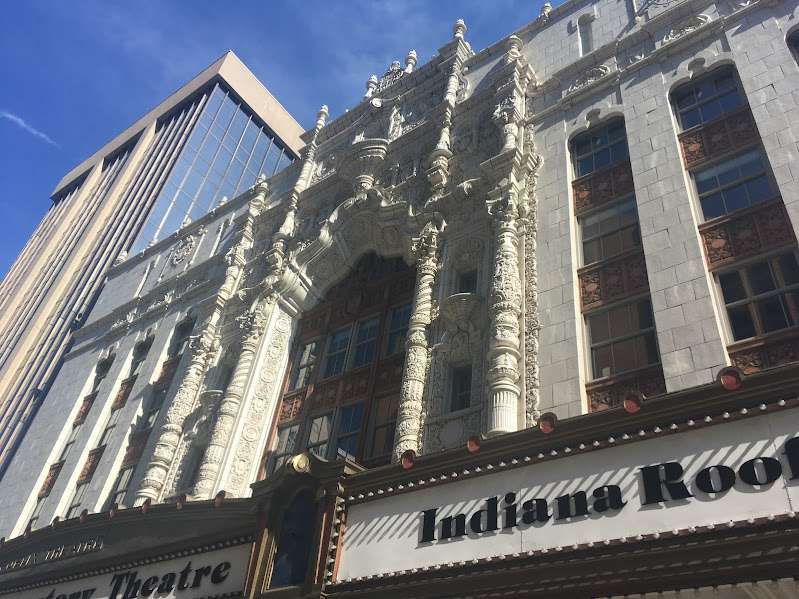
🌞 Day One in Indianapolis: Government, History, Racecars, and Victory Marches
Rise and shine, Internet Stranger — it’s time to start your 24 hours in Indianapolis the way any self-respecting state capital demands: with patriotism, learning, and a healthy respect for VERY fast machines.
We’ll kick things off at the Indiana State Capitol, where democracy lives, marble shines, and portraits silently judge your knowledge of Midwestern governors.
Then we’ll stroll to the Indiana State Museum, which has everything from prehistoric mammoths to Prohibition stories that would make Ron Swanson shed a single respectful tear.
But this isn’t just a buttoned-up history day — oh no. Next we’ll trade marble halls for adrenaline and engine roars at the legendary Indianapolis Motor Speedway. That’s right, we’re going from government buildings to 200-mph glory faster than you can say “Start your engines!”
Finally, we’ll wrap with a visit to the Soldiers & Sailors Monument, where you can climb, admire, and dramatically whisper “We made it,” like the heroic traveler you are.
Ready, set… Indy. 🏛️🏁🪖✨
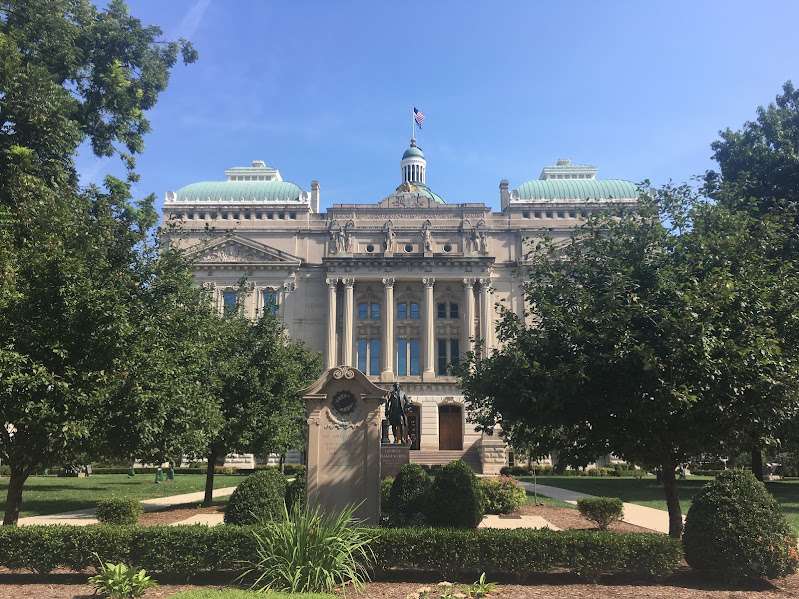
🌅 Morning: Indiana History Lesson!
Indianapolis is the capital of Indiana — which honestly checks out, because Indianapolis literally just means Indiana City. Subtle? No. Efficient? Absolutely. And when you only have 24 hours in Indianapolis, efficiency is the name of the game.
Like any proper state capital, Indy is packed with monuments, museums, and the kind of historical trivia that will make you unbearable at bar trivia nights (which is, of course, the dream). Since I was on my quest to visit all 50 states and absorb their stately vibes like a patriotic sponge, I knew the Indiana State Capitol was the perfect place to kick things off.
Naturally, I enhanced this educational experience by imagining that Leslie Knope — Indiana’s proudest fictional daughter and waffle enthusiast — was narrating my every move. Honestly? Highly recommend. Suddenly everything feels more inspirational and aggressively well-organized.
So join me now for my…
✨ approximately top 5: Indiana History

1) Governor’s Office
First stop on our Indy power-tour? The actual office of the Governor of Indiana. Yes, THE office. Yes, I sat in the big fancy chair. And yes, I absolutely squeaked, “Look at me! I’m Leslie Knope!” at a pitch that only teen interns and golden retrievers could hear. (She becomes Governor in the finale — Parks & Rec spoiler but also cultural homework.)
Our guide — let’s call her April in honor of the surliest admin queen — assured me that they get this behavior constantly, so I felt seen.
We also got to peek inside the rooms where the Indiana General Assembly does its legislating. And yes, I sat in those chairs too. I hope my butt is now a tiny, invisible part of Indiana democracy. You’re welcome, Hoosier history.
April casually mentioned that the legislature is part-time, so the senators all have other jobs. Lawyers? Sure. Farmers? Love it. Professional Elvis impersonators? Oh yes. Apparently more than one.
This is, without exaggeration, the greatest political fact I have ever learned. Long live democracy, long live Elvis, long live Indiana. Thank you, thank you very much. 🎤👑🇺🇸

2) Farmers Market Café at the Indiana State Museum
Our Indiana State House tour is fascinating but short — like a political TED Talk with better marble — so we’ve still got plenty of morning to fill. Time to head to the Indiana State Museum, where you can learn everything from where the word Hoosier might come from (spoiler: there are like eight theories and none of them involve shoe-throwing) to prehistoric Indiana creatures that absolutely did not ask to be fossil-famous.
But before we dive into all that knowledge… we must fuel up. I heard your stomach from across state lines, Internet Stranger.
The Farmers Market Café inside the museum is the perfect lunch spot: casual, quick, and filled with enough options to prevent the dreaded museum hangries. They’ve got salads, soups, hot and cold sandwiches, and even chips made right there. I grabbed the sriracha chicken sandwich with house-made chips, and honestly? Elite choice. When a city has good sriracha access, you know civilization has arrived.
Consider this your reminder: history is important, but snacks are foundational to democracy.

3) Tippecanoe and Tyler Too
Meet the man looming moodily on the left of my museum photo: William Henry Harrison. First governor of the Indiana Territory (emphasis on territory — he was never governor after statehood), eventual U.S. President, and… honestly? Kind of a walking cautionary tale in powdered wig form.
Let’s review his résumé, shall we?
- ✅ Slave-owner
- ✅ Tried very hard to make Indiana a slave state (thankfully failed)
- ✅ Led violent campaigns to forcibly remove Native Americans
- ✅ Won the Battle of Tippecanoe against the Shawnee
- ✅ Then ran for president proudly waving the slogan “Tippecanoe and Tyler Too” like, “Remember that time I caused a whole bunch of suffering? Vote for me!”
And America in 1840 went, “Sounds great, king!” and elected him. Democracy is a journey, folks.
Harrison then famously refused to wear a coat at his freezing inauguration — to prove he was rugged, I guess? — promptly got typhoid fever, and died 31 days later. Shortest presidency in U.S. history. The ultimate “choices have consequences” arc.
At this point, I can practically feel Indiana locals whispering, “He wasn’t born here, he doesn’t count as a real Hoosier.” And honestly? I get it. If someone that chaotic tried to claim my state, I’d want a refund too.

4) Hoosier: Inexplicable Nickname?
A Hoosier — as all Hoosiers (the movie) and Gene Hackman superfans know — is the nickname for someone from Indiana. But why? How? Who blessed us with this mysterious word?
The short answer: no one knows. The Indiana State Museum lays out multiple theories, and honestly, each one sounds like it could have been written after three bourbons and a brawl at an 1800s barn dance.
My favorite (and definitely most chaotic) theory? Early Indiana pioneers were such aggressive fighters that they frequently bit off each other’s ears, leading people to ask, “Whose ear?” …which somehow became Hoosier.
A+ folklore. F– believability. Unless Indiana was founded entirely by Mike Tysons, I call shenanigans.
The museum says the most plausible explanation is that Hoosier was once a slang word for hillbilly, eventually reclaimed with Hoosier pride — which, respect. Turning insults into identity is an American art form.
And, fun fact, Abraham Lincoln spent his childhood in Indiana — born in Kentucky, raised in Indiana, off to Illinois to glow up and get presidential. Three states battling over one man like it’s The Bachelor: Founding Fathers Edition. Personally, I vote that Indiana gets him, if only so the state’s most famous political figure isn’t… sigh… William “I Refuse to Wear a Coat and Then Immediately Died” Harrison.

5) The Great Migration
The Indiana State Museum doesn’t shy away from the complicated parts of history — and that includes the Great Migration, when African-Americans moved from the Jim Crow South to Northern states like Indiana between 1900 and 1930. During this period, the Black population in Indiana nearly doubled as families searched for safety, opportunity, and dignity.
The reality, however, wasn’t always the hopeful story they deserved. Some found better jobs and communities. Others found segregation, discrimination, and an unsettlingly large presence of the KKK in the Midwest. Progress? Yes. A perfect escape? Sadly, no.
The museum even includes an interactive simulator where you play as a Black business owner in early-20th-century Indiana. I tried every strategy I could think of — hustle, diplomacy, risk-taking — and still ended up blocked at every turn. It felt like Tic-Tac-Toe, except instead of Xs and Os, it was systemic racism and frustration. Spoiler: the game is brutally accurate.
It’s sobering. It’s important. And it’s part of understanding Indiana’s real story — not just its governors and ear-biting legends.
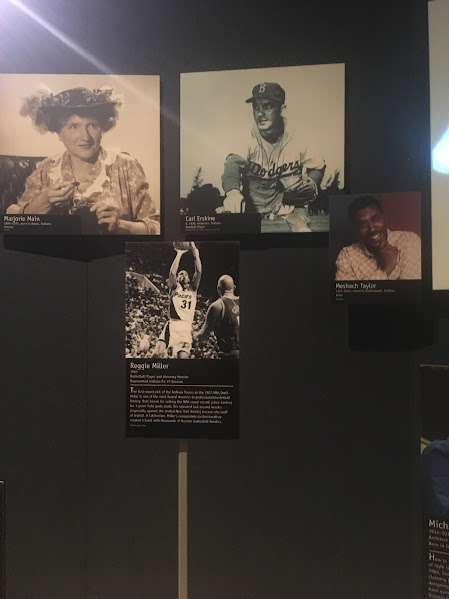
6) Famous Hoosiers
To wrap up our Indiana deep dive, the museum gives the warm fuzzies with a tribute to Great Hoosiers of History — the folks who put Indiana on the map in ways that don’t involve ear-biting folklore or questionable presidential coat decisions.
We’ve got icons like Ernie Pyle, the legendary war correspondent whose writing could break your heart and put it back together again. I may or may not have dramatically saluted his exhibit. (I did. I absolutely did.)
Then I spotted Meshach Taylor, who played the delightfully suave Anthony Bouvier on Designing Women. He grew up in Indianapolis, graduated high school here, and I instantly felt spiritually connected to every person in this city. A classy man and an absolute sitcom treasure.
But I know who you’re really here for. The Hoosier of Hoosiers. The Indiana bard. The denim prophet himself: John Mellencamp.

He was born in a small town
And he lives in a small town
He will probably die in a small town
And if anyone tries to sneak “Cougar” onto his tombstone, I will personally show up and politely but firmly say no. Dignity matters.

🚗 Afternoon: Self-Guided Indianapolis Tour
By now, my faithful readers know I am ride-or-die for a walking tour. If there were a shadowy underground Walking Tour Lobby handing out hush money and secret tote bags, I’d be first in line. Sadly, no briefcases of tour guide cash have arrived at my door — I just genuinely love wandering a city with someone who knows all the scandalous historical gossip.
But Indianapolis, bless its sprawling Midwestern heart, doesn’t exactly lend itself to pedestrian-only exploration. And I couldn’t find a guided walking tour to save my sensible sightseeing shoes. So instead, we’re going DIY style: a self-guided tour via walking, Ubering, and the occasional power strut through civic pride.
You’ll hit major landmarks, soak up Hoosier spirit, and maybe mutter inspirational Leslie Knope quotes to yourself — I certainly did.
Along the way, you’ll learn…
three fun facts: Indianapolis

1) Does Indianapolis Have a Nickname?
Oh Indianapolis… once upon a not-so-fun time, the city had the unfortunate nickname “India-No-Place.” In the 1960s, downtown was so quiet that the last bar in the city closed at 6 PM. Six. O’clock. PM.
That is earlier than my grandmother went to bed, and she’s been gone for over a decade. Sleep tight, Nana, but even you’d agree that’s bleak.
But then Indy said, “Actually, no. We choose life!” and launched a massive glow-up. The secret sauce? Sports. The city brought in professional teams AND put their stadiums right in Downtown Indianapolis. So instead of crowds fleeing the city at 5 PM like it was Cinderella’s carriage hour, people started flocking in for games, food, and fun.

Add in the Indianapolis Cultural Trail — an 8-mile walking and biking path connecting downtown neighborhoods — and suddenly Indy went from snoozeville to urban playground. Detroit and other cities have literally studied Indianapolis as a revitalization blueprint.
Not bad for a city that once shut down nightlife before the sun did.

2) Soldiers and Sailors Monument
Next up: the Soldiers and Sailors Monument, aka the dramatic, towering centerpiece of downtown Indianapolis. Completed in 1902, it honors Hoosiers who died in battle — particularly during the Civil War (Indiana fought for the Union, in case that wasn’t already clear from the “crushing the Confederate flag underfoot” sculptural energy happening here).
One side shows wounded soldiers; the other shows triumphant Union troops stomping Confederate symbolism like they’re squashing a particularly offensive bug. But the real scandal when this monument debuted? A couple kissing on the victory side.
In 1902, this was apparently THE SHOCK of the century. People fainted. Society gasped. Indiana clutched its pearls so hard they shattered. Honestly, considering bars were shutting down at 6PM back then, it tracks that PG-13 smooching caused a moral crisis.
Turn around from the monument and you’ll spot the club where Donald Trump asked then-Indiana Governor Mike Pence to be his running mate. And here’s where Indy reminds us the red state / blue city dynamic is alive and well: Indiana voted for Trump in 2016, while Indianapolis went blue. American politics — never boring, always contradictory.

3) Indianapolis Motor Speedway
Now buckle up, because we’ve arrived at the crown jewel of Indianapolis: the Indianapolis Motor Speedway, home of the legendary Indy 500 — one of the most famous and prestigious races on planet Earth. If sports had a Mount Olympus, this place would be the really loud part with the engines and the nacho stands.
Confession: I am not a racing person. My knowledge of race car drivers stops at Dale Earnhardt Jr., and only expands to his dad if genetics count as research. But still — walking into the Speedway feels like entering a modern Colosseum.
Only, you know, with more motor oil and slightly fewer gladiator fatalities.
Fun twist: the Speedway technically isn’t in Indianapolis at all. It’s in a neighboring town cleverly named… Speedway. (Town came after track — branding queen behavior.)
The track’s creation story is peak early-1900s energy. Carl Fisher, a headlight manufacturer turned auto hype man, decided Indy needed a car race to promote automobile sales. Totally normal marketing logic.
Only problem? Fisher’s headlight factories kept exploding because early headlights ran on extremely flammable gas. Shockingly, spontaneous industrial combustion is bad for business, so Fisher pivoted to cars instead. As one does.
He and his fellow visionaries launched the Speedway — and the first races were a disaster, featuring multiple tragic fatalities. Instead of saying “Wow, maybe this isn’t safe yet,” Fisher repaved the track and went, “Let’s try that again!” And thus the Indy 500 legend was born.
Moral of the story:
Test the track before the cars. Or don’t, and become a motorsport icon. Personally, I’ll continue not running explosive factories.

🕔 Late Afternoon: Soldiers and Sailors Monument
By the time you finish your self-guided tour, you’ll have plenty of time to tackle the Soldiers and Sailors Monument before closing. Don’t stress — this isn’t a full museum situation. You’re basically going up, looking majestic and windswept, and then coming down. Easy peasy, patriotic squeezy.
We’ve already admired the monument’s dramatic exterior — triumphant soldiers crushing Confederate flags, 1902 pearl-clutching kiss scandal, the whole cinematic package. Now it’s time to head to the top and score the best views of Indianapolis. Quick note:
There is no rooftop bar up here. Which… good. I love a cocktail with a skyline, but even I can admit that a monument honoring fallen soldiers is not the place for $17 martinis and DJ sets.
To reach the summit, you have two noble choices:
🥇 Climb 331 stairs like a proud American (and also someone who wants to earn their future cocktails)
🥈 Take the elevator most of the way and then climb only ~30 stairs to the top
I chose to climb the full staircase — partly for fitness, partly for bragging rights, and partly because “I climbed 331 stairs in Indianapolis” is the kind of humble‐brag that says I am cultured but also slightly unhinged, thank you.

I did, however, ride the elevator down. For science. And for the elevator selfie. You’re welcome, Internet Stranger — I suffer for my art.

🌆 Evening: Dinner at Four Finger Distillery
If there’s one thing my longtime readers know, it’s that my hunger for knowledge is rivaled only by my hunger for food. I research restaurants like some people research major life decisions. Doctoral dissertations have been written with less rigor than what I put into choosing dinner.
In Indianapolis, the most beloved spot — whispered about in foodie circles like a secret spell — is Bluebeard. They don’t take reservations, so I strutted in at 6 PM sharp, ready to devour whatever literary-themed delicacies they serve (hopefully not actual young brides, but one never knows).
Alas! A sign greeted me: Bluebeard would be “unexpectedly closed.” Betrayal! Culinary heartbreak! A tragic twist worthy of an Edith Wharton novel!
But fear not — the food gods were with me. Directly across the street sat a restaurant attached to Four Finger Distillery, practically winking at every disappointed Bluebeard pilgrim like, “Come to mama.” According to the hostess, this happens all the time — which is the kind of business strategy I respect.
And thank goodness, because this place is a destination all on its own, especially if you like creative cocktails (and if you read this blog, you do).

First up: Summer Pie, featuring rhubarb liqueur and Indiana strawberry wine. Indiana leans hard into fruit wines — grapes don’t thrive here, but strawberries apparently do, and honestly? Respect. The drink tasted exactly like the song “Strawberry Wine” feels. Sweet. Summery. Nostalgic. I briefly excused myself to perform the song into a hairbrush backstage (aka the ladies’ room). 10/10, would ballad again.

But you can’t attend a Prohibition-themed restaurant and sip only one cocktail. That’s not history — that’s cowardice. Most cocktails here sport Tarantino-inspired names, so I ordered an “Inglorious Basterds” — rye whiskey, Ancho Reyes chile liqueur, and habanero bitters. A Manhattan that went to culinary boot camp and came back spicy and emotionally complex. Chef’s kiss.

To accompany all this booze-based joy, I went comforting and classic with a juicy brisket sandwich — because brisket pairs beautifully with fiery cocktails and because, as my grandmother always said, “Brisket is the best thing to eat before going to fight Nazis.” Grandma didn’t come to play.
(They seem more pizza-focused now, but pizza also pairs great with anti-fascism. 🍕✊)

And yes, dessert is necessary even after a strawberry wine moment. I finished with rich bread pudding, because carbs were invented to protect our internal organs from whiskey. It’s science. Also, dessert is good for you as long as you don’t have more than three a day. I don’t make the rules… I just happily follow them.
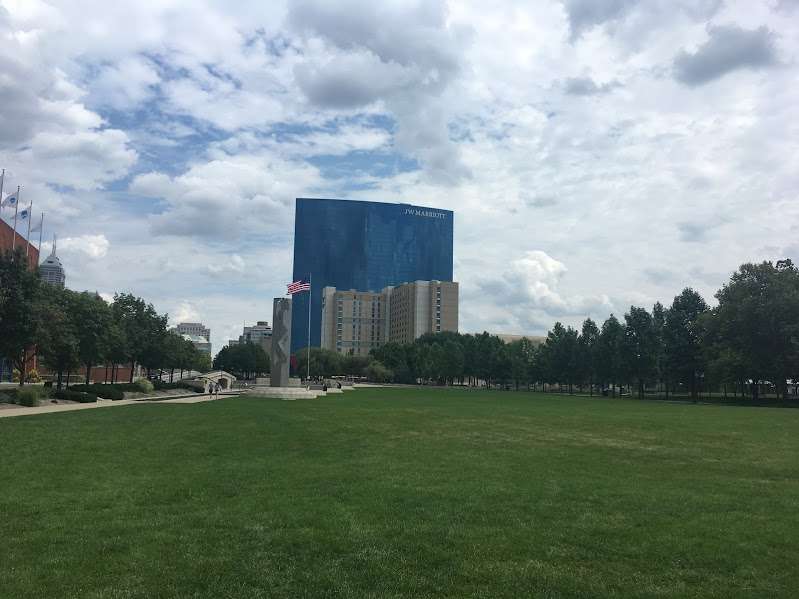
🦁 Day Two in Indianapolis: Zoos, Cowboys & Ron Swanson’s Steak Dreams
Good morning, Internet Stranger! Stretch, hydrate, and emotionally prepare yourself, because Day Two in Indianapolis is about to hit you with cute animals, world-class Western art, and enough steak to make Ron Swanson salute the American flag in silence.
We’ll kick things off at the Indianapolis Zoo, where you’ll meet seals, cheetahs, orangutans, and at least one animal who looks like it’s plotting to overthrow humanity. Enrichment, darling. That’s what we call enrichment.
Then we’ll trot on over to the Eiteljorg Museum, a stunning celebration of Native American and Western art that is so much more sophisticated than the cowboy hats your brain probably pictured. (Though, no judgment. Cowboy hats are forever chic.)
And to close out the evening? We will honor the spirit of Indiana’s greatest fictional son, Mr. Ron Swanson, with a pilgrimage to one of his favorite steak temples. A place where tofu fears to tread. A restaurant that understands protein on a spiritual level.
In short:
Animals. Art. Beef.
A perfect trifecta — Leslie Knope would approve (but she’d definitely bring waffles as a side).
Let’s ride. 🐅🎨🥩✨

🐾 Morning: Indianapolis Zoo
The Indianapolis Zoo is one of the city’s biggest attractions, and honestly? It deserves the hype. Whether you’re traveling with toddlers, teens, grandparents, or you’re a cranky young maid with strong opinions and sunscreen in her purse (hi hello), this place is pure joy.
Now, fair warning: admission here isn’t budget-bin cheap. But before you clutch your pearls and gasp “Capitalism!”, note that your ticket also includes the butterfly conservatory and botanical gardens, so you’re basically getting three attractions for the price of one. Bargain unlocked.
And truly, you could spend the entire day here, befriending talkative myna birds, staring lovingly at penguins, and trying to choreograph a TikTok dance with red pandas (they will not participate and will judge you, but in a cute way).
But I’m here to gently yank your attention toward something even more meaningful: the zoo’s incredible conservation mission. Indy Zoo isn’t just about gawking at adorable creatures — they’re out here saving species like they’re assembling the Avengers of biodiversity.
So for this guide, we’re going to highlight…
🐘 three fun facts: Indianapolis Zoo

1) What Conservation Work Do They Do?
Some of the best conservation stories at the Indianapolis Zoo come from their family of pinnipeds (that’s your five-dollar word for seals, sea lions, and the other aquatic cuties who look like they’re always wearing natural eyeliner).
One of the zoo’s most beloved stars was Ray, a California sea lion with a backstory straight out of a heartbreaking animal documentary. Ray was found off the coast of California with multiple gunshot wounds, which left him almost completely blind.
Now, I try not to be a vindictive person — life is short, forgiveness is healing, yadda yadda.
But there is a special VIP lounge in Hell reserved for people who shoot sea lions. What exactly is the motive there? Envy of their whiskers? Rage at their fish-based diet? Because unless sea lions have suddenly started breaking into homes and stealing flat-screen TVs, I fail to see the threat.
Since Ray couldn’t survive in the wild, the Indianapolis Zoo stepped in and gave him a safe, happy home where he lived out his days being adored, well-fed, and occasionally splashing spectators just for fun. When I visited, he was still very much alive, flipping, and thriving like the aquatic king he was.
Rest in peace, sweet Ray — patron saint of sea lion justice. 🦭💔✨

2) What About Lion Rescue?
One of the reasons I love to travel is that it forces me to learn about problems I never knew existed — like the surprisingly complicated question of how to keep lions from snacking on cows in Africa.
Because picture it: you’re a cattle farmer in lion country. You’ve worked hard to raise your herd. And then one night a majestic but inconveniently carnivorous lion strolls through like, “Hi, I’m nature and I’m hungry.”
Naturally, farmers don’t love this. Sometimes they retaliate by killing the lions, which is heartbreaking for conservation efforts.
Enter the Indianapolis Zoo, cape fluttering behind them like a wildlife superhero. They partner with Dr. Bernard Kissui, who works with communities in Tanzania to build stronger corrals so lions can’t get to the cattle in the first place.
Result?
- ✅ Farmers keep their livelihood
- ✅ Lions don’t get hurt
- ✅ Balance is restored to the circle of life
Everybody wins!
Well… except the cattle. They are definitely still going to die eventually — just, you know, in a more scheduled and organized fashion. 🐄😬

3) Do These Oddballs Need Conservation?
Conservation isn’t only for the glamorous animals — your sea lions, your regal lions, your fluffy-tailed red pandas living their best influencer lives. Weirdo creatures need saving too, and honestly? They deserve it.
Case in point: the Grand Cayman Blue Iguana. When you wander through the desert exhibit, you’ll learn these neon-blue reptilian goblins were once critically endangered — with fewer than 50 left in the wild. Fifty. Five-zero. That’s fewer iguanas than people in line for Starbucks on a Monday.
Enter the Indianapolis Zoo, which launched a breeding program to help bring these scaly chaos gremlins back from the brink. A noble cause!
Though I must say, if your official job title is something like Professional Iguana Matchmaker, you probably avoid small talk at dinner parties. (“So what do you do?” “Oh, um…🐊✨”)
Thanks to the zoo’s efforts — and the heroic work of Iguana Scientists™ — many of these iguanas are now reintroduced to the wild where they can thrive, bask lazily in the sun, and judge humans from atop a rock like nature’s tiny blue goth overlords.
Thank you, Iguana Scientists, for doing the scaly Lord’s work.

🌤️ Afternoon: Eiteljorg Museum
Morning is absolutely prime time for the Indianapolis Zoo — that’s when the animals are awake, the butterflies are fluttering, and the sea lions are out here living their best plot-twist-survivor lives. But after frolicking in the Indiana sunshine and crying happy tears over blind pinnipeds, it’s time to retreat to the sweet embrace of air conditioning and absorb some culture.
Enter the Eiteljorg Museum, Indianapolis’s brilliantly eclectic celebration of Native American and Western art. The name may sound like you’re trying to recite IKEA furniture while half-asleep — Eitel-what-now? — but it’s actually named after philanthropist Harrison Eiteljorg, who helped found the museum and thankfully didn’t name it something even trickier like Eiteljorg-Fjörd-McGallery.
Pronunciation aside, what I can promise you is an experience filled with stunning art, powerful history, and the occasional moment where you stare thoughtfully at a bronze cowboy and consider whether you should finally learn lasso skills.
So saddle up and join me for my…
✨ approximately top 5: Eiteljorg Museum

1) Eiteljorg Museum Café
After spending the morning watching adorable animals eat their lunches at the zoo, it’s only fair that you treat your own stomach with equal dignity. Before we explore the galleries and get emotionally walloped by history and art, let’s fuel the brain (and, let’s be honest, the vibes).
Head straight to the Eiteljorg Museum Café, where you can score a very civilized and wallet-friendly soup-and-sandwich combo. I went with the veggie soup and a BBQ sandwich — light enough to keep me upright, hearty enough to keep me from turning into a museum-ghost who haunts gift shops asking, “Do you have snacks?”
And special shout-out to the free cornbread, which I absolutely did not expect and absolutely did not share. A surprise cornbread moment is like finding $5 in your pocket — small, magical, and capable of turning your entire afternoon around.
Because trust me: the main feast of the day is still ahead.

2) The Crows Bent Low and Flogged Their Horses
One of the most thought-provoking exhibits at the Eiteljorg examines art about Native Americans made by non-Native artists, and how those depictions shaped public perception — and policy — for generations. It’s the kind of exhibit that gently taps you on the shoulder and says, “Actually, context matters a LOT.”
Take this painting by W.H.D. Koerner, originally created for The Saturday Evening Post. Koerner was born in Germany but became passionately devoted to the American West. Unlike many artists of his era, he actually traveled through the region, studied the landscape, and tried to portray scenes with realism and respect.
And yes — Koerner’s work is far more grounded than those dramatic, wildly inaccurate paintings by men who had never met a Native person in their entire lives but somehow still felt qualified to paint sweeping scenes of “noble warriors” and “savage battles.” (Sir, you’ve never even seen a buffalo. Sit down.)
But here’s the key takeaway the museum highlights: for most white Americans in the 19th and early 20th centuries, images like this weren’t just art — they were their entire understanding of Native life. These were depictions about Native Americans, not by them, and that distinction mattered then just as it matters now.
Art tells stories — but sometimes the most important thing is to ask whose story is being told, and who got to tell it.


4) Potawatomi Belt
One of the most fascinating parts of the Eiteljorg is its floor dedicated entirely to Native American art and cultural works, showcasing pieces that hold history, identity, and meaning far deeper than what meets the eye.
Take this Potawatomi belt, dating back to the 19th century. The intricate beadwork was created using glass beads brought from Europe, obtained by trading animal skins with settlers — a stark reminder that global trade routes and cultural exchange (voluntary and otherwise) reached deep into everyday Native life.
The patterns woven into the belt hold religious and cultural significance for the Potawatomi people. But here’s something I appreciate: the museum notes that the specific meanings are reserved for tribal members. Not every piece of knowledge was meant for public consumption, and honoring cultural boundaries is just as important as preserving the art itself.
Now, small note — and museum folks, please don’t ban me: the display case has this breathtaking belt sitting right below a… very normal‐looking basket. I’m sure the basket is historically significant and beautifully made, but next to the glorious beadwork, it kind of looks like someone forgot their shopping tote in the exhibit.
For a moment, I truly considered reporting it to Lost & Found like, “Excuse me, a museum guest has left their artisanal produce holder near the priceless beadwork.” Possibly the basket deserves a more basket‐centric display, just so us confused visitors don’t briefly think a curator misplaced their lunch bag.

5) Salmon Quest
One thing I really admire about the Eiteljorg is that it doesn’t freeze Native culture in the past — it celebrates living, thriving Native artists too. This striking sculpture is by Nez Perce artist Doug Hyde, and the piece honors the deep cultural importance of salmon to his community.
In the artist’s statement below the work, Hyde shares that the sculpture reminds him of fishing with his grandfather as a kid — which, honestly, might be one of the most wholesome backstories I’ve ever encountered in a museum. Forget gritty artist-in-a-garret stories; give me “grandpa and fish memories” any day.
Also, I knew salmon were important… I just did not know they could apparently be Titanic-sized river beasts. Every salmon I’ve ever met was already chopped, rolled in rice, and politely covered in spicy mayo. So if you, like me, have only encountered salmon in “sushi-but-make-it-brunch” form, prepare to have your pescatarian worldview rocked.
Evening: Dinner at St. Elmo Steak House
St. Elmo Steak House is an Indianapolis institution, full stop. It’s the kind of place that could grill a shoe and you’d still clap politely and say, “Wow, the umami.” Also, it’s canonically Ron Swanson’s favorite steakhouse, and honestly, a happier endorsement simply does not exist. Bow down to the mustachioed meat king.
Not into fictional character recommendations? Fine. How about a James Beard American Classic Award? Yeah. This place is serious about steak — and America.
And so I arrived, ready to carnivore it up like a pioneer who just won the land lottery.
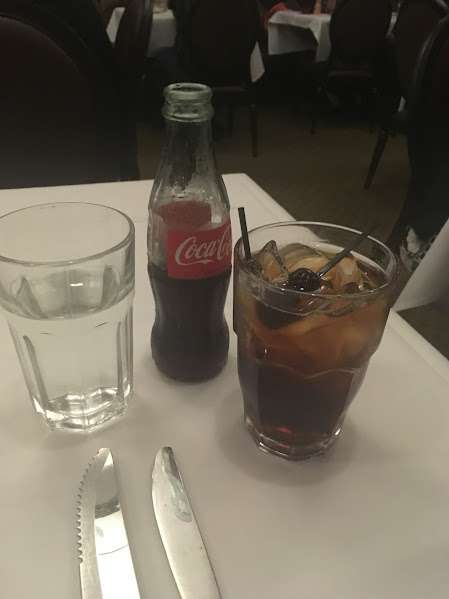
I kicked things off with an Elmo Cola (bourbon + bottled Coke). Do not get it with Diet Coke unless you want to summon a demon made of aspartame and regret. This is a Don-Draper-adjacent beverage — specifically something Lane Pryce might chug while practicing his American accent in the mirror and humming “Stars and Stripes Forever.”

Then St. Elmo’s most famous weapon arrived: the legendary shrimp cocktail. PSA:
🛑 Do. Not. Eat. A Whole Shrimp. At Once. 🛑
The cocktail sauce is approximately horseradish napalm. I did the One-Shrimp Challenge like a clown, immediately cried, and two gentlemen at the next table — let’s call them Mr. Elmo and Mr. Elmo Jr. — laughed in that affectionate “aw, tourists” way. If you nibble in small bits, it’s divine. If you inhale it? RIP your sinuses.

Next: filet mignon, medium rare, as God intended.
Anything beyond medium and I’m pretty sure Ron Swanson appears in a puff of hickory smoke and confiscates your steak rights. This one was melt-in-your-soul good — fat marbling like a Renaissance painting, juices like a Shakespearean sonnet. Worth every penny and then some.
Between courses, Mr. Elmo and lil Elmo struck up conversation. Dad was too old, son was too young, and neither offered me their family fortune, so I was forced to pay my own bill — but we vibed anyway. Dad even offered to treat me, and I politely declined because I am an independent honey who makes her own money. Still, shout-out to the Elmos — you made this steak even juicier.
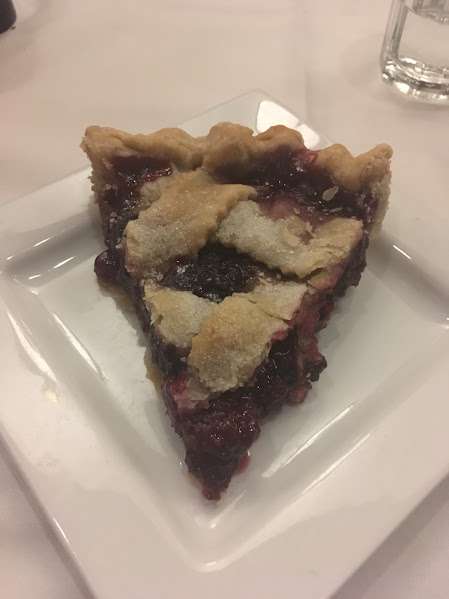
Finally: seasonal pie from My Sugar Pie in Zionsville. Blackberry, flaky lard crust, tart-sweet filling — perfection. I ate it in peace after the Elmos departed, probably off to fight crime or found a bourbon startup.
Go to St. Elmo. Order the steak. Respect the shrimp. And maybe you’ll get lucky and meet your own Local Steak Benefactor™.
💬 Three Quirky Questions to Ponder
- If Ron Swanson invited you to a steakhouse and silently judged your drink order, would you choose bourbon, scotch, or something so bold he’d begrudgingly nod in respect?
- Would you attempt the St. Elmo shrimp cocktail whole just to say you survived, or do you value your nasal passages too much for that level of heroism?
- Be honest: if a charming two-top of Indianapolis gentlemen offered to pay for your whole fancy dinner, would you politely decline like me… or accept and immediately name your firstborn “Elmo” in gratitude?
Got answers? Hot takes? Shrimp-related trauma stories?
Email me at stellajane@aroundtheworldin24hours.com — I love hearing from my Internet Strangers! 💌